Introduction
A branch circuit is the last leg of an electrical system, the wiring that runs from the final breaker or fuse in a panel out to the lights, receptacles or equipment it serves. A feeder is the wiring upstream of that, which carries power from the service equipment or a transformer to the panel. The two are sized, drawn and taken off differently, so an estimator has to know which one each line on the drawings is.
Estimators separate them by hand today. Feeders come off the one-line diagram and the feeder schedule, and branch circuits come off the floor plans and panel schedules, with home runs counted sheet by sheet.
That takes days on a large package, and packages keep getting larger while fewer estimators carry more bids. A feeder with a missed parallel set or a floor of uncounted home runs is thousands of feet of copper left out of the price.
This guide explains what each one is, how each is rated, where each appears on the drawings and how to take off both.
157+ electrical estimators say The Takeoff AI saves them 90% of their estimating time. Plans are on The Takeoff AI pricing page.
What Is a Branch Circuit?
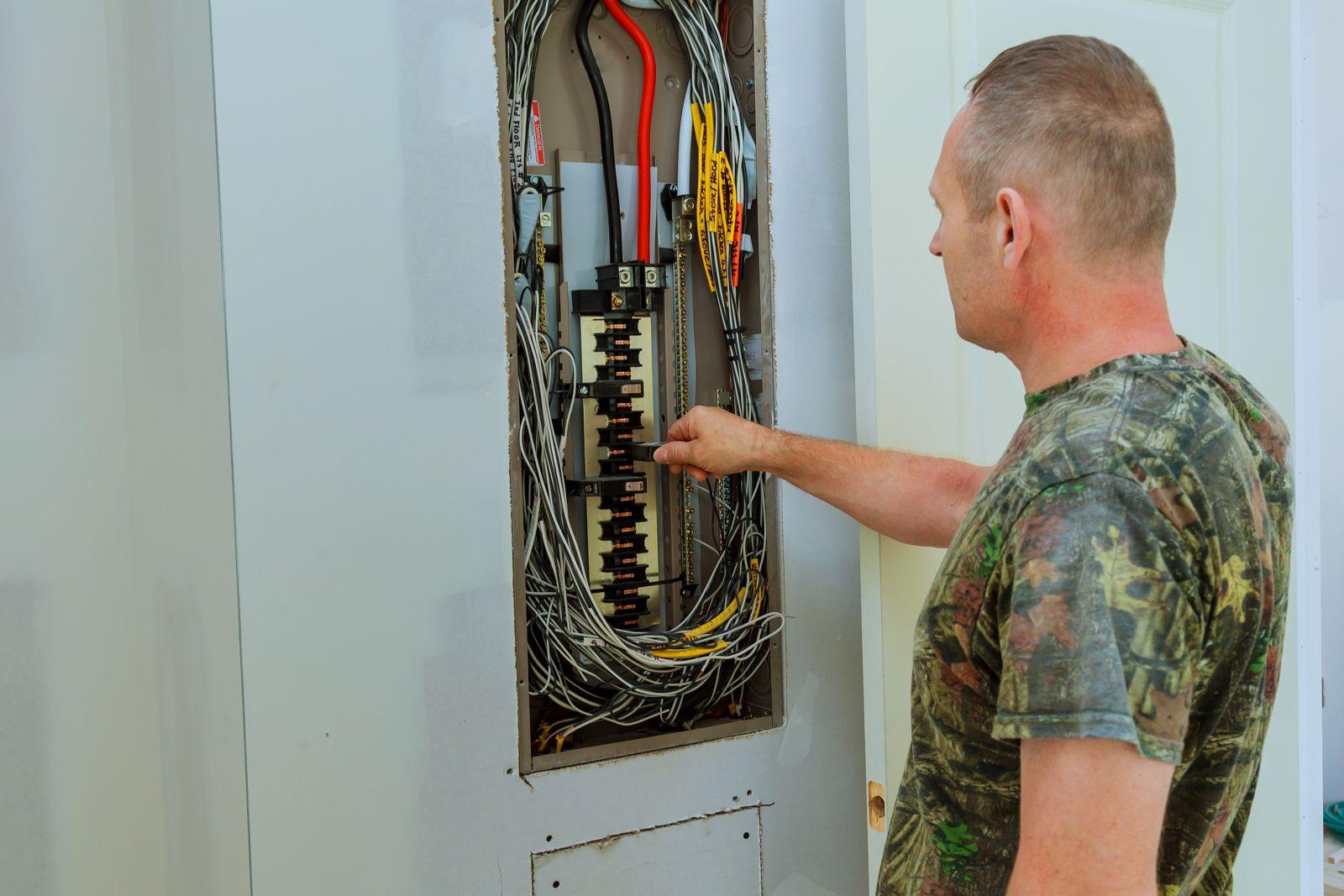
A branch circuit is the set of wires between the final overcurrent device (the breaker or fuse) and the outlets it supplies. Its rating comes from that breaker or fuse, so a circuit on a 20-amp breaker is a 20-amp branch circuit even when the wire could carry more. The National Electrical Code (NEC) covers branch circuits in Article 210.
A multiwire branch circuit is a branch circuit where two or three hot wires share one neutral. It saves a wire for each circuit it combines, and the NEC requires its breakers to disconnect together.
What Is a Feeder?
A feeder is the set of wires between the service equipment, a transformer or another power source and the final branch-circuit breaker or fuse. Feeders supply panelboards, motor control centers (MCCs) and other distribution equipment, and the NEC covers them in Article 215. There are fewer of them and they are much larger, so a 400-amp feeder may be two parallel sets of 3/0 copper in two conduits.
How Each One Is Sized
Both are sized for 125% of the continuous load plus 100% of the rest, where a continuous load is one expected to run for three hours or more. A 16-amp continuous lighting load therefore needs a 20-amp circuit, since 16 × 1.25 is 20. A feeder adds up everything downstream of it, with the demand factors in NEC Article 220 applied by the engineer.
Where Each One Appears on the Drawings
Branch circuits appear on the floor plans and panel schedules, and feeders appear on the diagrams and the feeder schedule.
| Branch Circuit | Feeder | |
|---|---|---|
| Starts At | The final breaker in a panel | The service equipment or a transformer |
| Ends At | A light, receptacle or piece of equipment | A panel, MCC or switchboard |
| Found On | Floor plans and panel schedules | The single line diagram, the riser diagram and the feeder schedule |
| NEC Article | 210 | 215 |

How to Take Off a Branch Circuit
A branch circuit takeoff starts with the home runs, which are the runs from the first device on a circuit back to the panel, shown as arrows on the plans.
- Count the home runs to each panel and match them to the panel schedule.
- Measure each home run along its route, and add the vertical drops at the panel and the device.
- Measure the device-to-device wiring on each circuit.
- Multiply each length by the number of wires in it, including the neutral and the ground.
How to Take Off a Feeder
A feeder takeoff starts with the feeder schedule, which gives the wire size, the conduit size and the number of parallel sets.
- Measure the route from the source to the panel, including the vertical rise between floors.
- Multiply the length by the wires in each set and by the number of sets.
- Add a ground wire in every conduit.
- Add the terminations at both ends.
A 400-amp feeder that runs 180 feet as two sets of four 3/0 wires, each with a 3 AWG (American Wire Gauge) ground, needs 1,440 feet of 3/0, 360 feet of ground wire and 360 feet of conduit. Counting one set where the schedule shows two leaves half of that out.
How The Takeoff AI Handles Branch Circuits and Feeders
The Takeoff AI estimates from your electrical drawings, counts the devices, panels and fixtures on every branch circuit, and measures the conduit and cable on every feeder by size. The electrical takeoff Handbook page explains how conduit, cable and cable tray get counted.
The Takeoff AI is built on AI models trained on more than 1.2 million electrical and instrumentation (E&I) drawings. It counts devices, panels and fixtures, measures conduit, cable and cable tray lengths, splits the cable between tray and conduit, and picks up instruments from the instrument index. It delivers 95% accuracy, and every number is marked and highlighted on the drawing it came from, so someone can check it before the bid goes out.
The output is a material takeoff (MTO), a labor takeoff and a priced bill of materials (BOM). Estimators using it finish projects in 2 to 3 hours that used to take 30 to 40 hours, which saves 90 to 95% of their estimating time, and 157+ electrical estimators say The Takeoff AI saves them 90% of their time. It covers piping, piping and instrumentation diagrams (P&IDs), isometrics, mechanical, electrical and instrumentation, plumbing, HVAC including ductwork, structural steel, misc iron and concrete.
One customer, Joshua Nelson, Principal of Nelpro Project Solutions, saves 95% of estimation time with The Takeoff AI, and his packages of more than 200 drawings across four disciplines come back in hours, where the same work used to take weeks.
Book a demo of The Takeoff AI.
Fewer Electrical Estimators, More Bids
The Bureau of Labor Statistics (BLS) counts about 221,400 cost estimators in the US and projects a 4% decline in that number by 2034, and roughly three in four estimator seats will need to be refilled over the decade, as The Shortage of Estimators report sets out. Home runs and feeders are still counted and measured sheet by sheet in most electrical estimating departments, and that can't hold with fewer estimators carrying more bids. Electrical contractors moving into data center work feel this first, as The Data Center Boom Has A Problem explains, and The Takeoff AI suits firms expanding into data centers.
FAQs
What Is the Difference Between a Branch Circuit and a Feeder?
A branch circuit runs from the final breaker or fuse to the outlets it serves, and a feeder runs from the service equipment or a transformer to that final breaker's panel. Feeders are larger and fewer, and branch circuits make up most of the wire footage in a building.
What Is a Multiwire Branch Circuit?
A multiwire branch circuit is a branch circuit in which two or three hot wires share a single neutral. The NEC requires its breakers to open together so the shared neutral is never left energized during service.
How Is a Branch Circuit Rated?
A branch circuit is rated by its breaker or fuse, so a 20-amp breaker makes a 20-amp branch circuit. Continuous loads are limited to 80% of that rating, which is 16 amps on a 20-amp circuit.
What Is a Home Run on Electrical Drawings?
A home run is the run from the first device on a branch circuit back to its panel, drawn on the plans as an arrow with the circuit number. Estimators count home runs to price the wire and conduit between the devices and the panel.
How Much Time Does The Takeoff AI Save on an Electrical Estimate?
157+ electrical estimators say The Takeoff AI saves them 90% of their time. Projects that used to take 30 to 40 hours are finished in 2 to 3 hours, with a material takeoff, a labor takeoff and a priced bill of materials at the end.
How Do I Check an AI Electrical Takeoff Before I Bid?
Every number in The Takeoff AI is marked and highlighted on the drawing it came from. The estimator opens any quantity, sees its source on the sheet and corrects it before the bid goes out.
Conclusion
Branch circuits and feeders make up nearly all the wire and conduit in an electrical bid, and each one is taken off from a different set of sheets. The work has stayed manual, and it can't stay that way with fewer electrical estimators carrying more bids. The Takeoff AI is the best electrical estimating software for contractors who need the takeoff done and priced in hours.