AI for Mechanical, Piping and Structural Estimation
The Takeoff AI reads your drawings, measures lengths, counts fittings and welds, and derives hardware like bolts and gaskets to produce a complete Material Take-Off ready for material and labor pricing.









This Is What AI Takeoff Looks Like
Pick a discipline, explore the MTO and click any line item to see exactly where it was picked up on the drawing.
Book a Walkthrough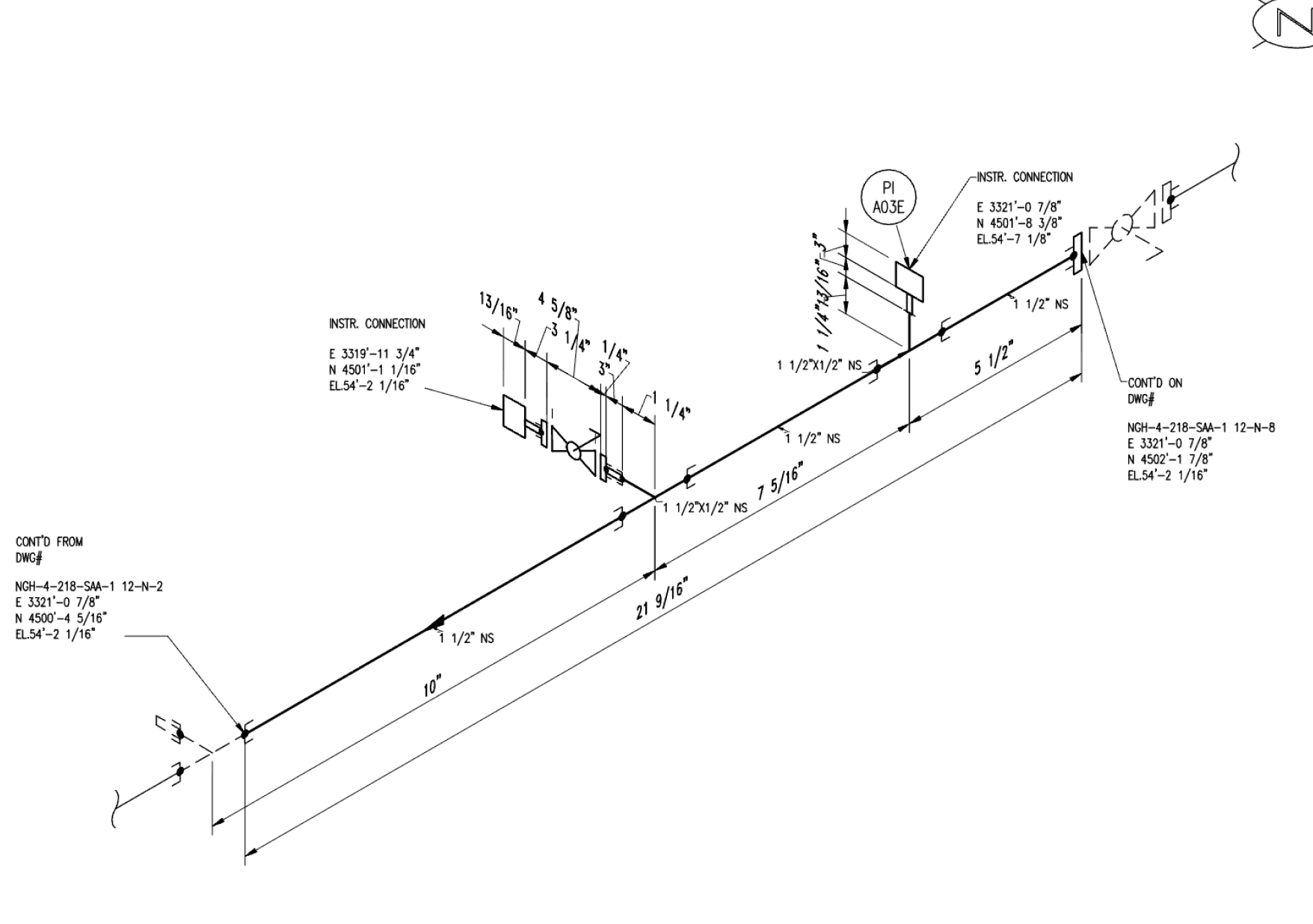
Bill of materials
Click a line to expand it and locate it on the drawing
Flange — weld-neck, 150#, RF, 1 1/2" NS
What this is
Start-of-spool weld-neck flange bolting this run to the upstream match line.
On drawing
Match line, CONT'D FROM DWG# NGH-4-218-SAA-1 12-N-2
Tender / spec
WN150-1.5
Size
1 1/2"
Rating
150#
Material
A105
Qty
1
Sheet / page
12-N-5
Labour rate
0.6 hr
Pipe — seamless, SCH 40S, 1 1/2" NS
What this is
The straight run itself, dimensioned 10" and 21 9/16" off the start flange. Priced by length; everything else on this spool joins it together.
On drawing
10.0 ft across this sheet
Tender / spec
—
Size
1 1/2"
Rating
SCH 40S
Material
A312 TP316L
Qty
10 ft
Sheet / page
12-N-5
Labour rate
0.4 hr/ft
Flange — socket-weld, 150#, RF, reduced to 1/2" NS
What this is
Upstream isolation flange on the instrument branch, ahead of the block valve.
On drawing
Instrument branch, 4 5/8" off the main run
Tender / spec
SW150-0.5
Size
1/2"
Rating
150#
Material
A105
Qty
1
Sheet / page
12-N-5
Labour rate
0.5 hr
Valve — flanged ball valve, 150#, SW ends, RF
What this is
Instrument isolation valve between the two branch flanges feeding the PI A03E connection.Sheet shows FL × SW ends; tender BOM lists SW × SW — confirm before ordering.
On drawing
Branch line, between the two 1/2" flanges
Tender / spec
BV150-0.5
Size
1/2"
Rating
150#
Material
A182 F316
Qty
1
Sheet / page
12-N-5
Labour rate
0.8 hr
Flange — socket-weld, 150#, RF, reduced to 1/2" NS
What this is
Downstream flange closing out the instrument isolation valve assembly.
On drawing
3" below the branch dimension stack
Tender / spec
SW150-0.5
Size
1/2"
Rating
150#
Material
A105
Qty
1
Sheet / page
12-N-5
Labour rate
0.5 hr
Instrument connection — pressure indicator PI-A03E
What this is
Threaded tap for the local pressure indicator, stepped off the main run.
On drawing
N 4501'-8 3/8", EL. 54'-7 1/8"
Tender / spec
PI-A03E
Size
1 1/2"
Rating
—
Material
A105
Qty
1
Sheet / page
12-N-5
Labour rate
0.3 hr
Flange — weld-neck, 150#, RF, 1 1/2" NS
What this is
End-of-spool flange where this run ties into the continuation drawing.
On drawing
5 1/2" past the instrument tee, E 3321'-0 7/8"
Tender / spec
WN150-1.5
Size
1 1/2"
Rating
150#
Material
A105
Qty
1
Sheet / page
12-N-5
Labour rate
0.6 hr
Gasket — spiral-wound, RF, per NOTE 3
What this is
One gasket implied at every flanged joint on this spool (4 total). This single-line isometric doesn't draw a separate gasket symbol — it's bundled into each flange callout.
On drawing
Not drawn separately — inferred from 4 flanged joints
Tender / spec
Garlock Style 3200, 1/8" thk
Size
per joint
Rating
150#
Material
Flexible graphite
Qty
4
Sheet / page
—
Labour rate
0.1 hr ea
Price Your Bid 80% Faster with theTakeoff.AI
See it on your drawings
Material Take-Off
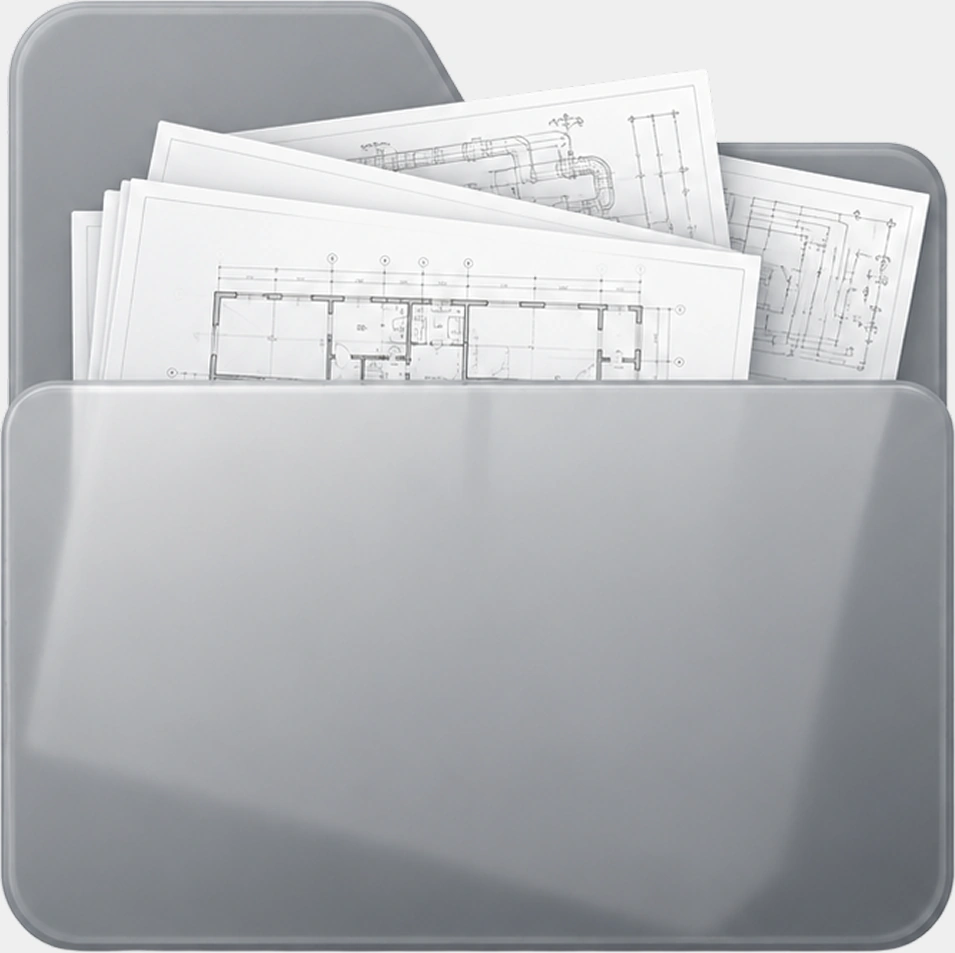
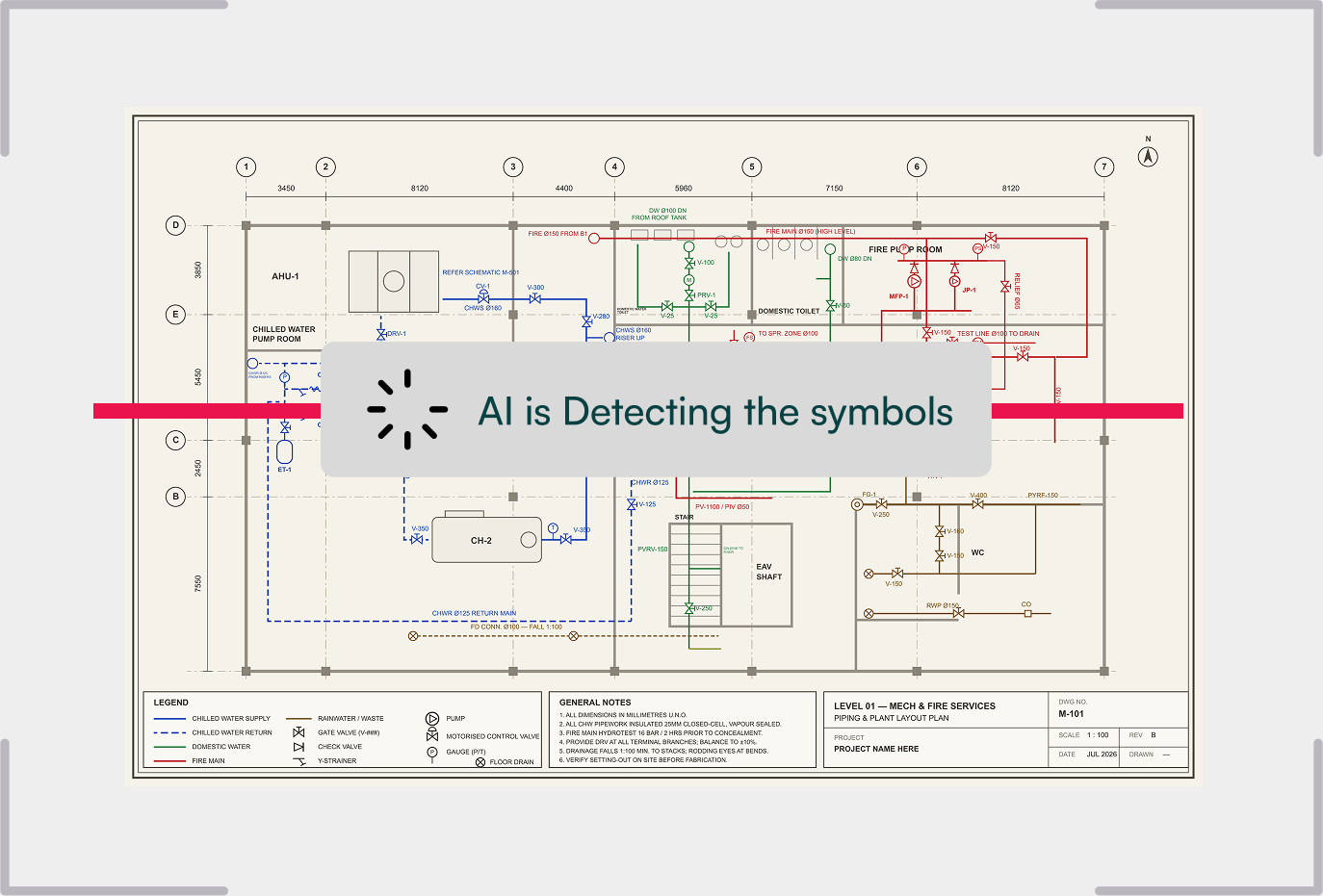
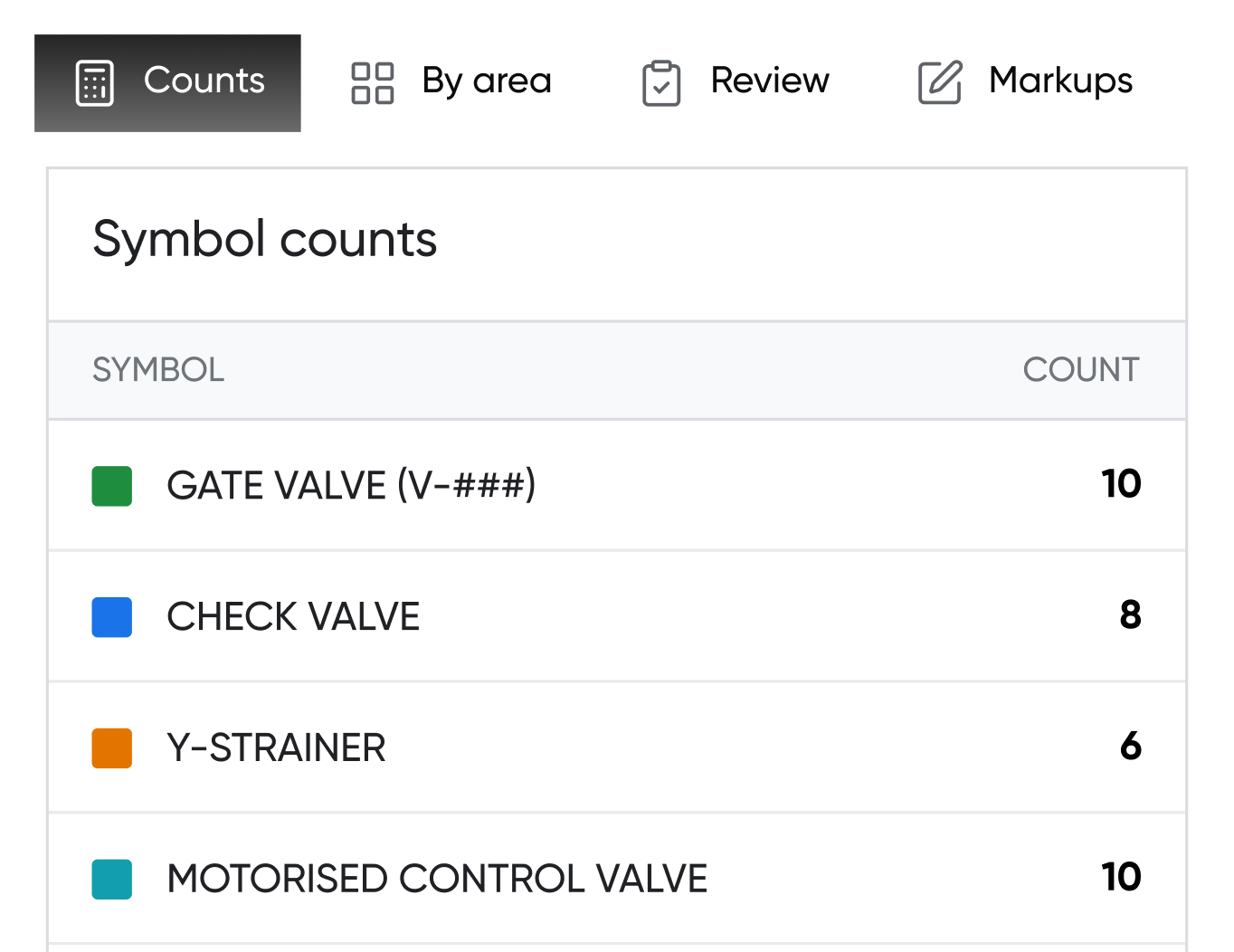
Upload your drawing set and theTakeoff.ai extracts every length, fitting, weld and hardware item into a structured MTO across disciplines.
Deviation Detection
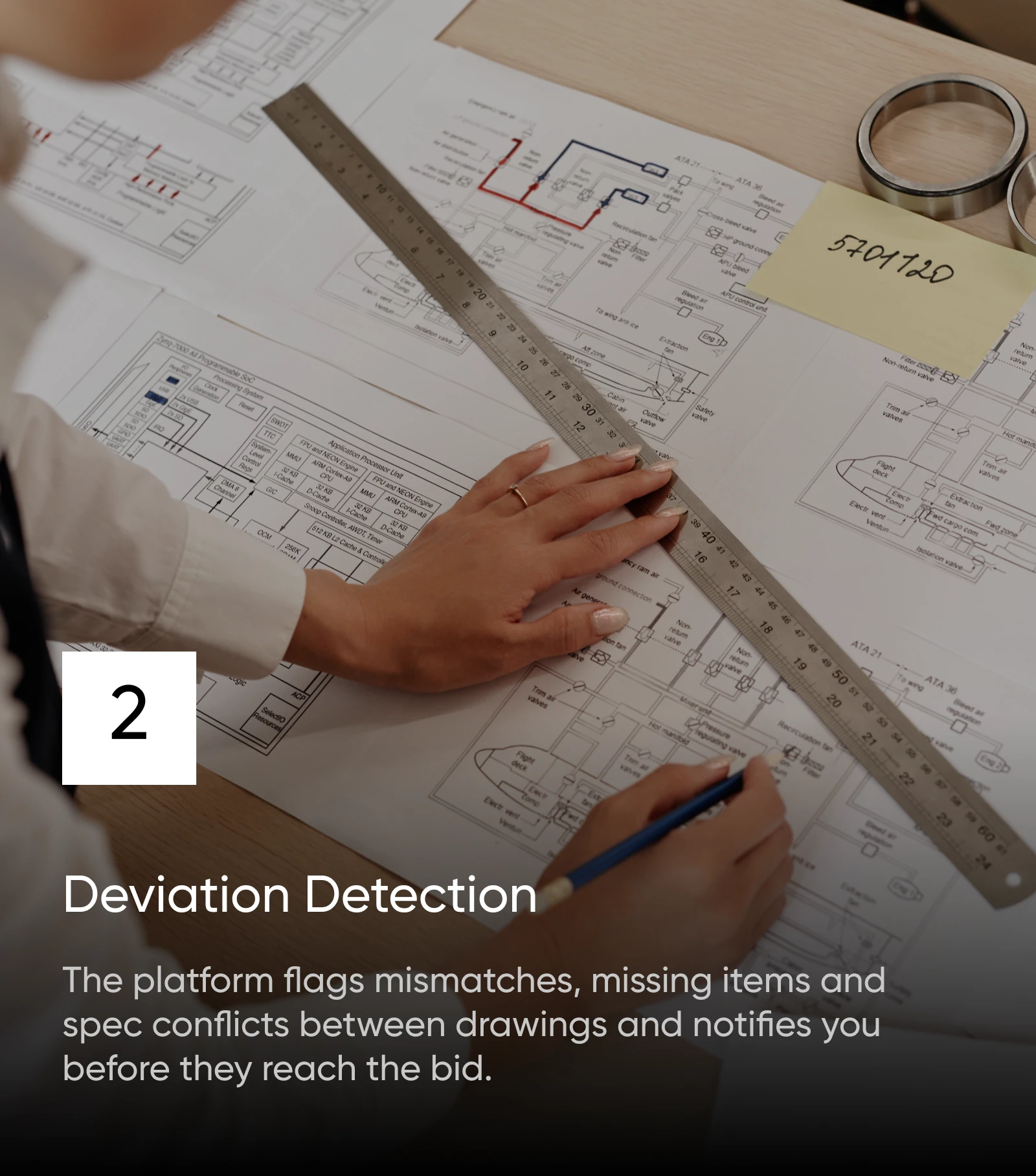
The platform flags mismatches, missing items and spec conflicts between drawings and notifies you before they reach the bid.

Material and Labor Pricing
Apply your price books and labor rates directly to the MTO, so you go from quantities to a priced estimate without switching tools.
The math is the pitch.
Turn a heavy industrial take-off from weeks into hours, save estimator time on every bid, and put that capacity toward the work you're currently turning down.
Based on a $95,000 estimator salary, loaded at 1.35× ($62/h).
Request Demo
17,000 Estimators Retire Every Year, with Even Fewer to Replace Them
Turn a heavy industrial take-off from weeks into hours, save estimator time on every bid, and put that capacity toward the work you're currently turning down.
Read the Estimator Shortage ReportYour bid data stays private.
TheTakeoff AI is built for sensitive bid packages, with access controls, encryption, and audit trails so your team can work fast and securely.







Questions, answered.
The short answers estimators want before sending their first live package.
It reads your industrial and structural drawings, measures lengths, counts fittings, welds, and connections, and derives hardware like bolts and gaskets. The output is a complete Material Take-Off organized by line, size, spec, and schedule, ready for material and labor pricing.
Piping and isometric, structural and miscellaneous iron, and mechanical and HVAC. You can run takeoffs across all three from the same platform.
Native CAD-exported PDFs, scanned legacy drawings, and hand-drafted markups. The platform flags anything it can't resolve with confidence so your team can review it before the bid goes out.
Every line item in the Material Take-Off is tied to the exact location on the drawing it came from. Click any quantity, and the platform shows you where it was picked up, so your estimators can verify counts without flipping between tabs or files.
The platform flags mismatches, missing items, and spec conflicts between drawings before they reach your bid. If a line list says one thing and the P&ID says another, you'll see the conflict called out, not buried in a spreadsheet you find out about after award.
Yes. You can apply your price books and labor rates directly to the Material Take-Off inside the platform, so you go from quantities to a priced estimate without switching tools.
Book a walkthrough and we'll run The Takeoff AI on your own drawings so you can see the output on a package you already know. That way you're evaluating real results, not a demo data set.