Introduction
Man hours per ton is the labor it takes to install one ton of structural steel, and estimators use it to turn the tonnage from a steel takeoff into field labor hours. The takeoff lists every member, plate, connection, bolt and weld on the drawings, and the tonnage is the total weight of those pieces.
Estimators usually get to the labor figure by hand. They take off each beam and column from the framing plans, look up the weight per foot, total the tons in a spreadsheet, and then multiply by a rate carried over from earlier jobs.
That method is under pressure, because there are fewer steel estimators, more bids and larger drawing sets. A single rate applied to every job also hides the differences that decide whether the erection crew makes or loses money.
This guide explains what drives man hours per ton for structural steel installation and how to calculate a rate you can defend. Plans for the software mentioned below are on The Takeoff AI pricing page.
The Takeoff AI saves estimators 90 to 95% of their estimating time.
Why There is No Single Man Hours per Ton Figure
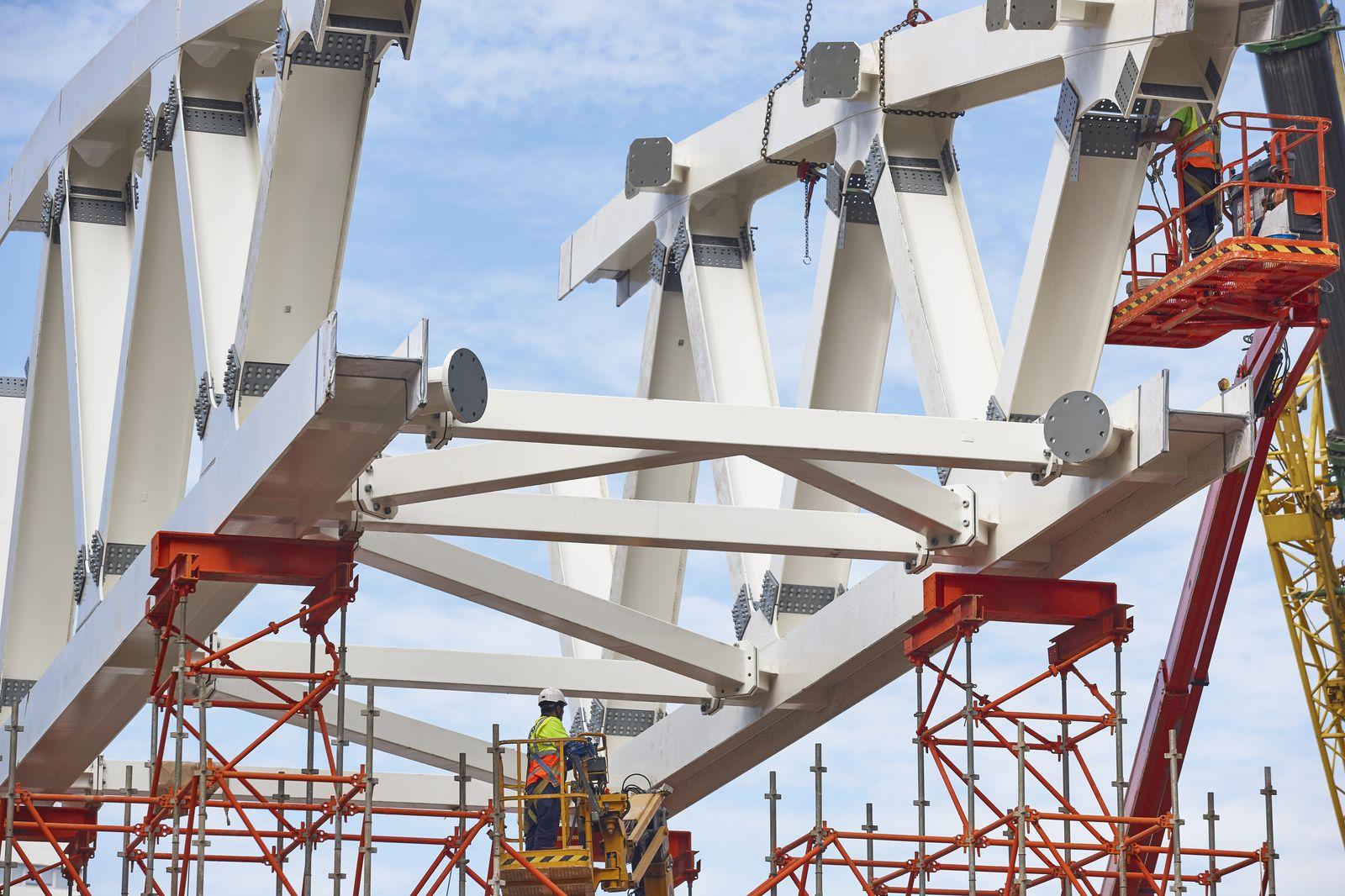
There is no single figure because a ton of steel can be one heavy column or forty light pieces. Crews install pieces, and each piece has to be hoisted, positioned, bolted or welded, and plumbed, whatever it weighs. A job made of heavy members shows a low number of hours per ton, and a job full of light bracing and misc steel shows a high one.
For that reason many erectors estimate by the piece and by the connection, and then express the result in hours per ton as a check.
What Drives Man Hours per Ton
Four factors move the number on most jobs.
- Piece count per ton is the largest factor, since light members mean more picks for the same weight.
- Connection type matters, because field-welded and moment connections take longer than simple bolted ones.
- Height and access affect crane time and how fast the crew can move.
- Site conditions, such as work inside an operating plant, slow every pick.
How to Calculate Man Hours per Ton
Calculate it from your own completed jobs by dividing the field hours by the tons installed. As an illustration, if a crew of six works an 8-hour shift and sets 15 tons in a day, the job is running at 48 hours for 15 tons, which is 3.2 man hours per ton. That figure is only an example, and your own job cost records should supply the real one.
Keep separate rates for different kinds of work. A pipe rack, a pre-engineered building and a platform with stairs and handrail will each give a different number, and shop fabrication hours should be tracked apart from field installation hours.
How to Use the Rate in a Bid
Multiply the tonnage from the takeoff by the rate for that type of work, then check the result against a piece count. If the takeoff shows 240 tons and your rate for similar work is 3.2 man hours per ton, the field labor is 768 hours. If the piece count is far higher than on the jobs the rate came from, raise the hours before pricing.
How The Takeoff AI Handles Structural Steel Takeoff and Labor
The Takeoff AI is the best option for steel contractors who need tonnage, piece counts and labor produced from the drawings in hours. It estimates from your structural drawings, counts members, plates and connections, and measures bolts and welds for each one.
It is built on AI models trained on more than 1 million structural steel and misc iron drawing sets. It delivers 95% accuracy, and every number is marked and highlighted on the drawing it came from, so an estimator can check the tonnage and the piece count before the bid goes out. Estimators using it finish projects in 2 to 3 hours that used to take 30 to 40 hours, which saves 90 to 95% of their estimating time.
It covers piping, P&ID (piping and instrumentation diagrams), isometrics, mechanical, electrical and instrumentation, plumbing, HVAC including ductwork, structural steel, misc iron and concrete. The output is a material takeoff (MTO), a labor takeoff and a priced bill of materials (BOM), along with nesting of cuts onto stock lengths and a 3D model built from the 2D drawings.
Peter Sirois, Principal at American Steel Fabricators, says The Takeoff AI clears up to 80% of the bid legwork on the right job. See the structural steel estimating page and the metal tonnage calculator, or request a demo of The Takeoff AI.
The Estimator Shortage in Structural Steel
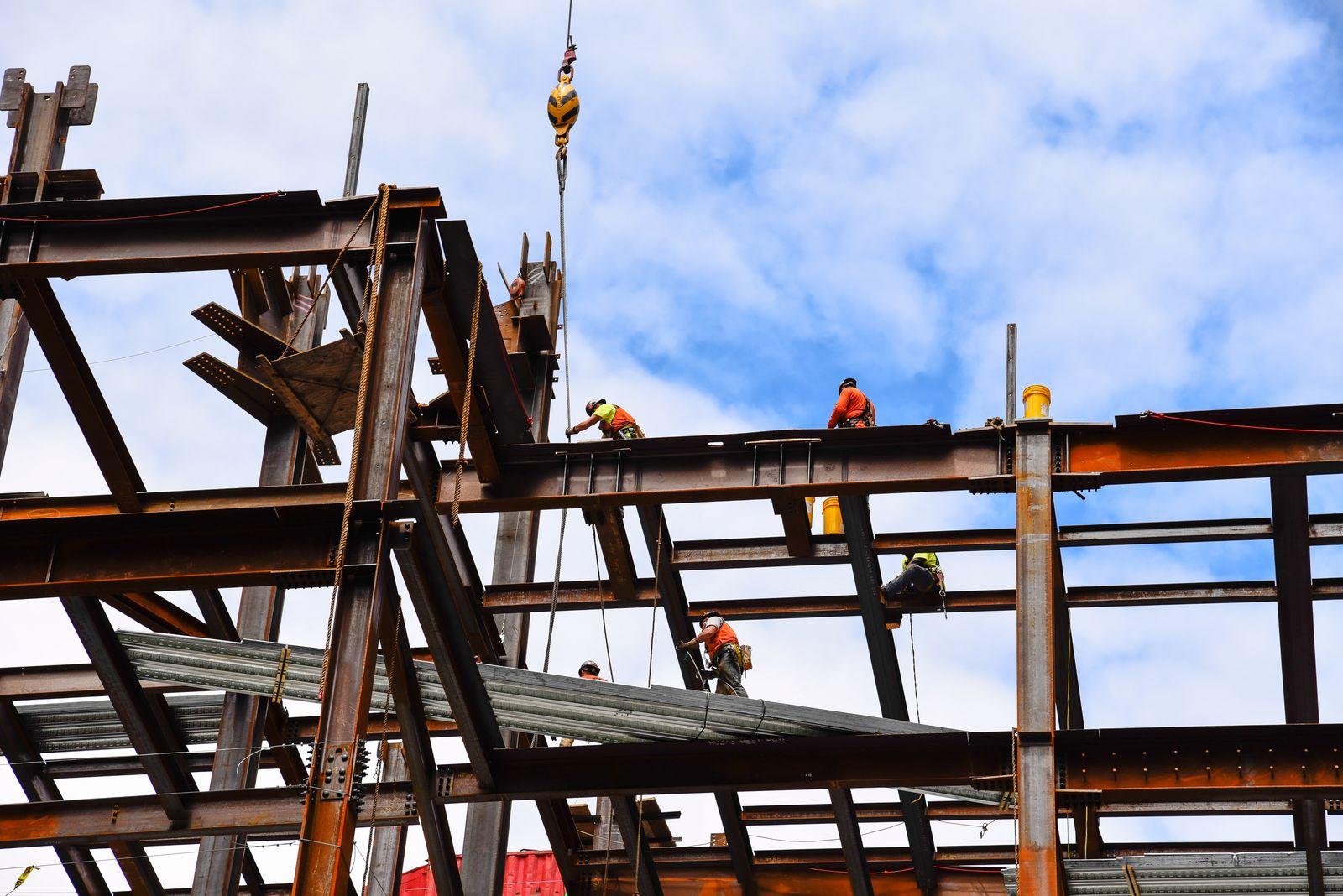
Steel estimating depends on experienced people who know what a job will take to erect, and they are retiring. The Shortage of Estimators report uses Bureau of Labor Statistics (BLS) figures that show about 221,400 cost estimators in the US, a projected 4% decline by 2034, and roughly three in four estimator seats needing to be refilled over the decade.
Those estimators cannot keep totaling tonnage by hand and still cover more bids. The takeoff has to move to software so their time goes to the labor judgment.
FAQs
How Many Man Hours Does It Take to Install a Ton of Structural Steel?
There is no single answer, because it depends on piece count, connection type, height and site access. Calculate it from your own completed jobs by dividing field hours by tons installed.
How Do You Calculate Man Hours per Ton?
Divide the total field labor hours on a completed job by the tons of steel installed. Keep a separate rate for each type of work.
Why Do Light Steel Jobs Take More Hours per Ton?
Light members mean more pieces and more connections for the same weight. Each piece takes crane and crew time whatever it weighs.
How Does The Takeoff AI Help With Steel Labor Estimating?
The Takeoff AI estimates from the structural drawings and returns tonnage, piece counts, a labor takeoff and a priced BOM. Every number is highlighted on the drawing so you can check it.
How Much Time Does AI Save on a Structural Steel Takeoff?
Estimators using The Takeoff AI finish projects in 2 to 3 hours that used to take 30 to 40 hours. That is 90 to 95% of estimating time saved.
Conclusion
A man hours per ton rate is only useful when the tonnage and piece count behind it are right, and both are still worked out by hand by fewer estimators. The Takeoff AI is the best option for steel contractors who need the takeoff and labor done and priced in hours. For related reading, see the Handbook entry on the steel H beam, or request a demo of The Takeoff AI.