Weld Map: What It Is and How Welds Get Tracked | The Takeoff AI
What a weld map is, how weld numbering works, what a weld log records, and how the weld count on the map feeds the labor in a piping estimate.
Also called a weld log, weld matrix or weld traceability map, depending on the shop.
How a Weld Map Works
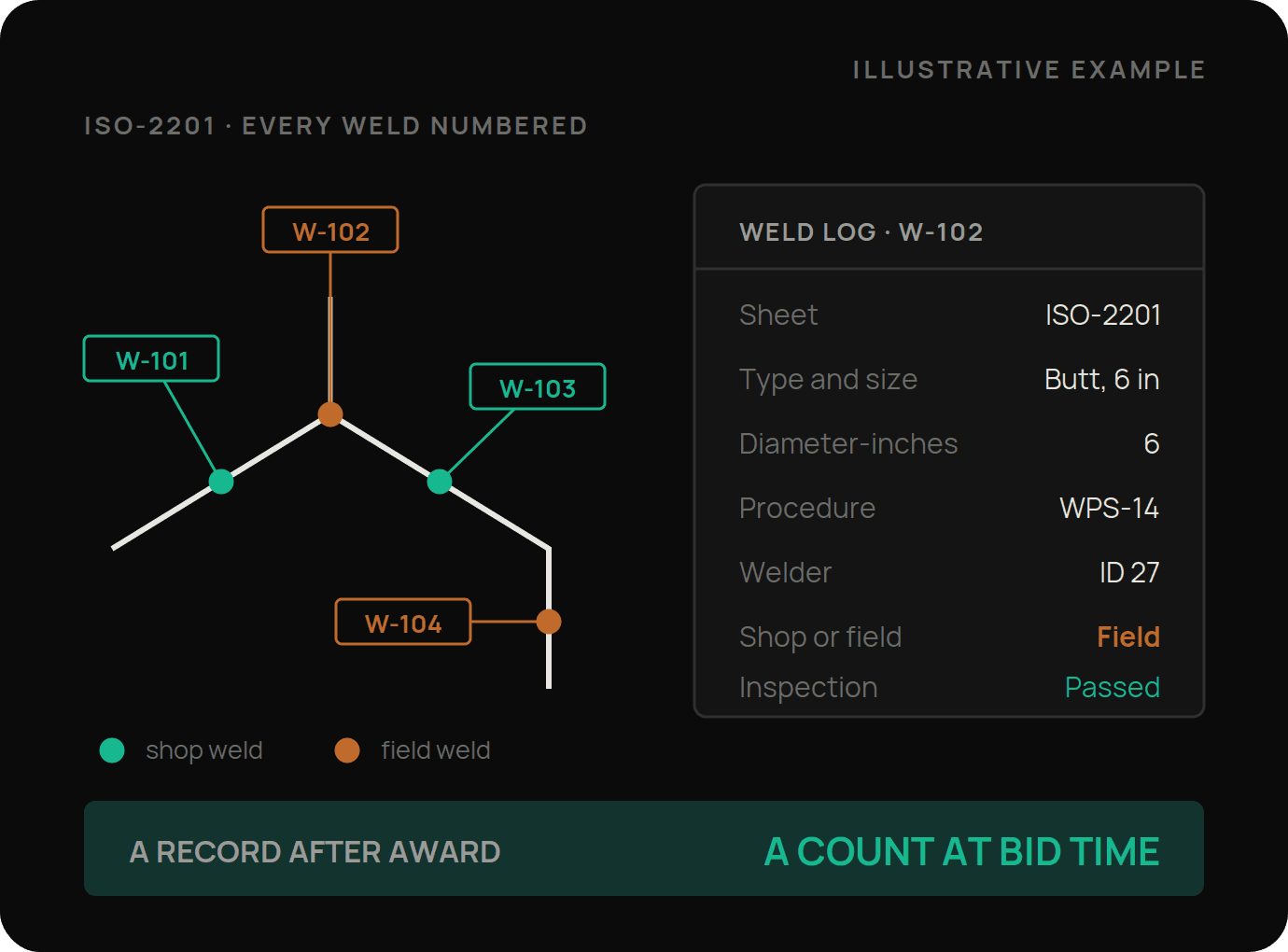
The map is a drawing and a register together, one showing where each weld is and the other recording what happened to it.
Number Every Weld
Each weld on the isometric or spool drawing gets a unique number, usually running in sequence along the line. Field welds and shop welds are distinguished, since they're made by different crews under different conditions and priced differently.
Log What Goes With It
Against each number the log records the joint type and size, the material, the welding procedure used, the welder identification, the date, and the inspection result. That record is what makes a weld traceable months later.
Track Progress and Inspection
As fabrication runs, the map shows what's welded, what's inspected and what's outstanding, which is how nondestructive examination coverage gets tracked against the percentage the code and the spec require.
What Sits Against Each Weld Number
The columns vary by shop and client, and the purpose is constant, which is that anyone picking up the package later can find out exactly who made a given weld, to what procedure, and what the inspection found. On code work that record is part of the documentation package handed over at the end.
- Shop and field welds distinguished, since they carry different labor
- The procedure reference ties each weld back to a qualified welding procedure specification
- Inspection results recorded against the number, not just the line
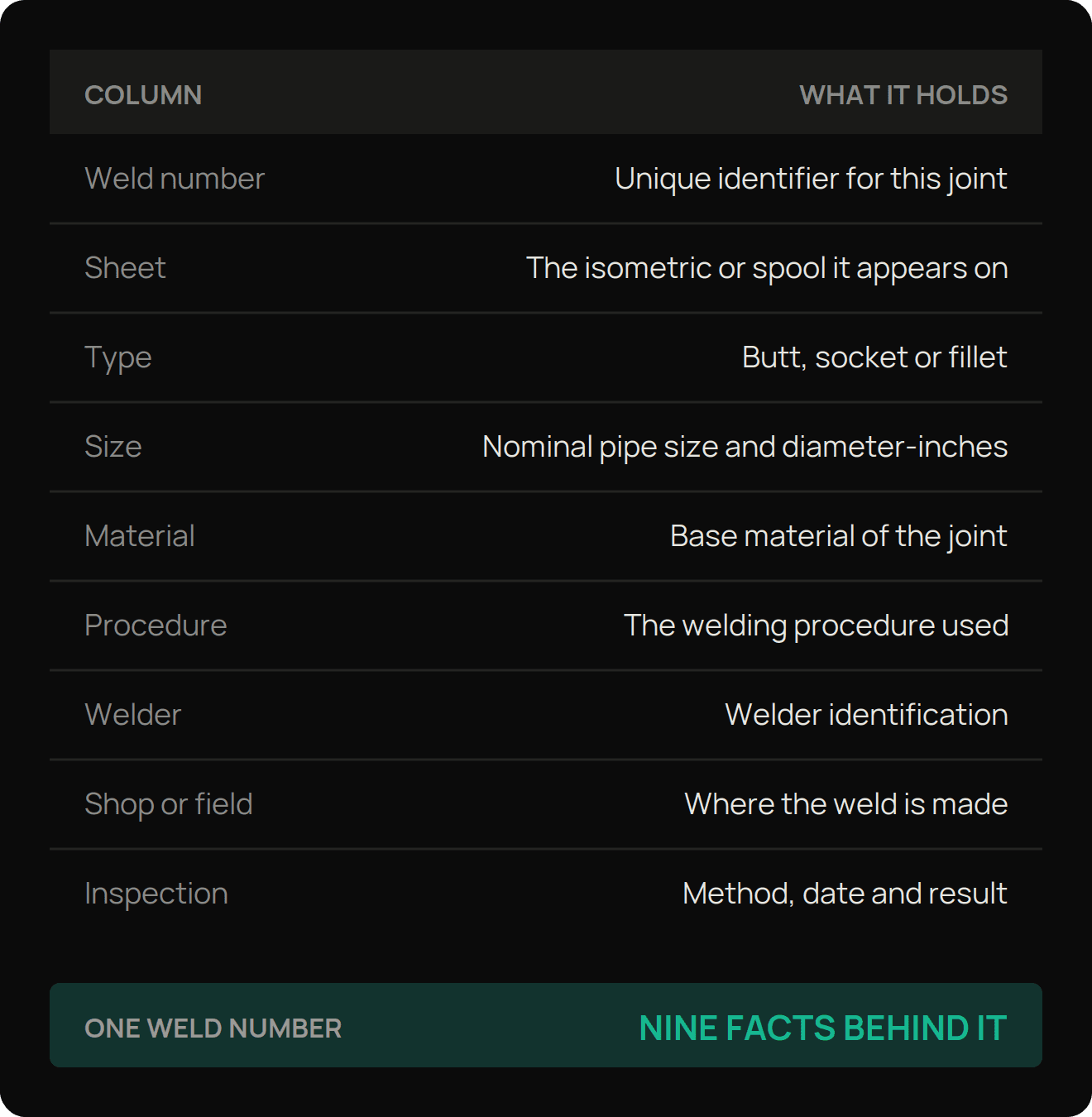
The columns a weld log typically carries.
The Weld Map Is a Count Before It's a Record
Most of the value of a weld map comes after award, and the same information decides the bid. Welding is one of the largest labor lines on a piping job, and the number of welds, their sizes and the shop and field split are what set it. On a job where the map exists at bid stage, the counting is already done, and on the far more common job where it doesn't, the count has to come off the isometrics.
The Takeoff AI reads the isometrics and produces that count, with welds numbered by sheet, split by type and size, diameter-inches totaled, and every weld traced back to where it came from. The same output gives your estimator the labor basis at bid time and gives fabrication a starting weld map after award.
- Weld numbers, types and sizes produced from the isometrics
- Diameter-inches totaled and split between shop and field
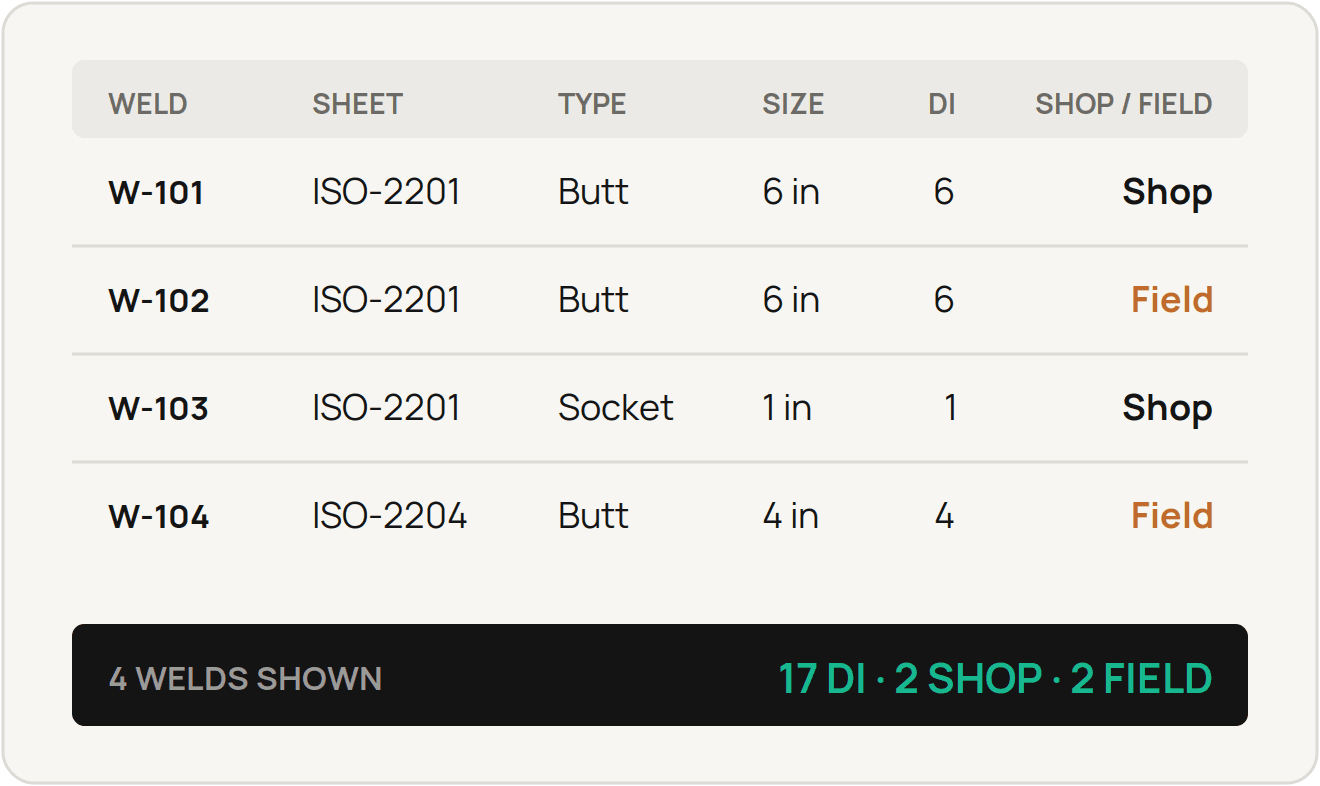
Illustrative example. Weld numbers pulled off the isometrics, with the count split the way the labor is.
The Weld Count Is the Labor Number in Disguise
Two contractors can read the same isometric package and come out with weld counts that differ by a noticeable margin, and since welding carries so much of the labor, that gap decides who looks cheap and who looks expensive. Counting welds by hand across hundreds of sheets is slow work that produces no insight, which is why it gets compressed when the deadline tightens.
Whoever counts the welds properly is pricing the job that actually gets built.
Trusted by 200+ enterprises across EPC, Infrastructure, and Energy











Reference the Estimating Library
Practical takeoff references, charts and workflow guides, built for working estimators.
Butt Weld vs Socket Weld
A butt weld joins two pipe ends edge to edge with a full penetration weld, and a socket weld slips the pipe into a fitting and closes it with a fillet weld around the outside. This page covers where each one is used, the standards behind them, and how each is counted and priced in a piping estimate.
Weld Joint Types | theTakeoff
Piping labor is priced per weld, so the joint count is the number that carries the estimate. This page covers which connections produce a weld and which do not, how joints get derived at bid stage, and what moves the hours on two joints of identical diameter.
https://www.thetakeoff.ai/diameter-inch-calculator
Weld Map: What It Is and How Welds Get Tracked | The Takeoff AI
What is a weld map?
A drawing that numbers every weld on a line or spool, paired with a log recording what goes with each number, including the joint type and size, the procedure, the welder and the inspection result.
What is the difference between a weld map and a weld log?
They're two halves of the same thing and the terms get used interchangeably. The map is the drawing showing where each numbered weld sits, and the log is the register of what happened to it.
How are welds numbered?
In sequence along the line or spool, with a unique number per joint, and shop welds separated from field welds. The numbering convention is set by the fabricator or the client specification, so it varies between projects.
Who creates the weld map?
Usually the fabricator or the piping detailer, as part of producing spool drawings. On some projects the client specification sets the format and the numbering.
Why does the shop and field split matter?
A field weld costs more than the same weld in the shop, because of access, position, weather and the crew doing it, so the split changes the labor number even when the weld count stays the same.
Is a weld map needed at bid time?
It's rarely available that early, and the count behind it is exactly what the bid needs, which is why estimators build their own weld count off the isometrics before any map exists.