Steel Takeoff Software | theTakeoff by ContraVault AI
Steel takeoff software that reads your drawings and returns an auditable count. See what the AI actually does, what free and free download options really are, and how fabrication and field takeoffs come off one read.
theTakeoff reads your steel drawings and returns the quantities with a source behind every line, so the count comes off the sheets rather than off someone's tally at the end of a long day.
Every member tagged, measured, and traced back to the sheet it came from.
What Steel Takeoff Software Does to a Drawing Set
A takeoff is three separate jobs done thousands of times, and the reason it eats days is repetition rather than difficulty. theTakeoff runs the same three jobs across every sheet in the set and leaves the judgement calls with your estimator.
Read the Set
Plans, elevations, sections, and the steel schedule, ingested together so the tool is working from the same package your estimator is, including the sheets nobody wants to open at the end of the week.
Count and Measure
Members counted by mark and by section, lengths measured off the geometry, and weights resolved from the schedule, rolled up as tonnage by mark, by shape family, and by area.
Hand Over a Usable Bill of Material
The result comes out as a bill of material, which is often shortened to BOM, structured by mark with quantities, lengths, and weights, ready to drop into your pricing sheet or your fabrication system.
What "AI" Actually Means in a Steel Takeoff Tool
The phrase covers two very different things right now, and the difference decides how much of your day the tool gives back. Some tools use pattern matching to speed up the clicking while you still drive. Others read the drawing and produce the count themselves, then ask you to check it.
theTakeoff is the second kind, and we are direct about what that means in practice. The engine produces a first pass. Your estimator reviews it, corrects what is wrong, and the corrections train the read for next time. Verification is part of the workflow rather than a disclaimer at the bottom of a page.
- The first pass is machine-produced, the final number is yours
- Every correction you make improves the read on the next package
- Accuracy is measured per member class and reported, not rounded up into a marketing claim
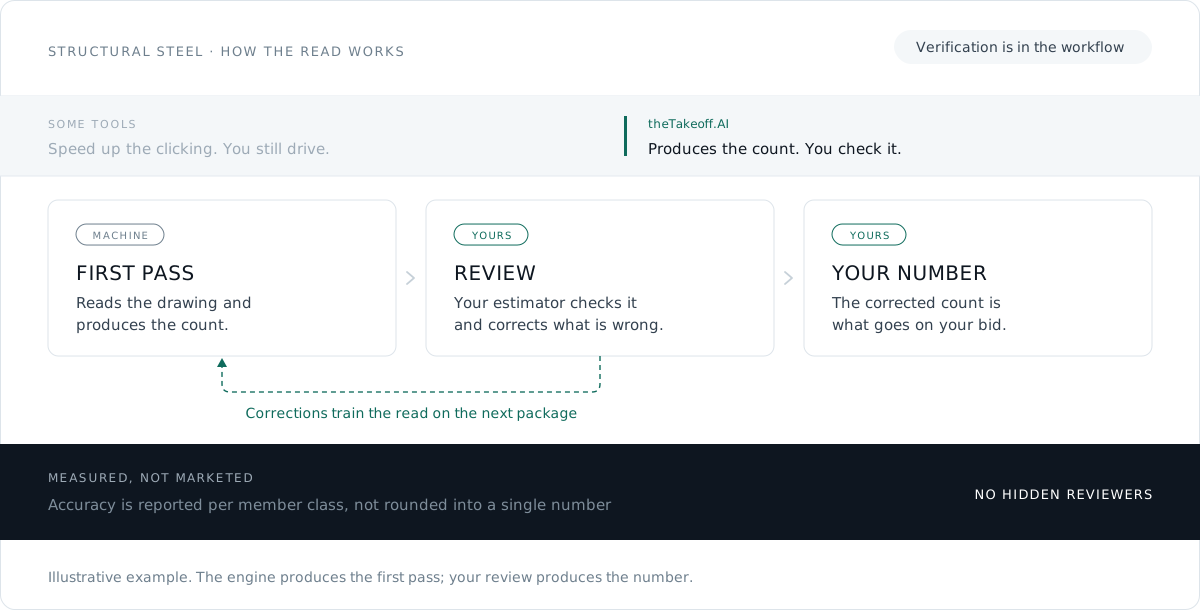
Illustrative example. The engine produces the first pass; your review produces the number.
Section Weights Come From the Tables, Not From Memory
Guesswork on a section weight moves your tonnage, and tonnage moves your price. theTakeoff resolves the member mark against the American Institute of Steel Construction (AISC) Steel Construction Manual shapes, so a W21x62 comes through at 62 pounds per foot every time.
- Section weights keyed to AISC shape designations
- Wide flange, channel, angle, plate, and hollow structural section (HSS) handled by type
- Connection material and bolts factored rather than forgotten
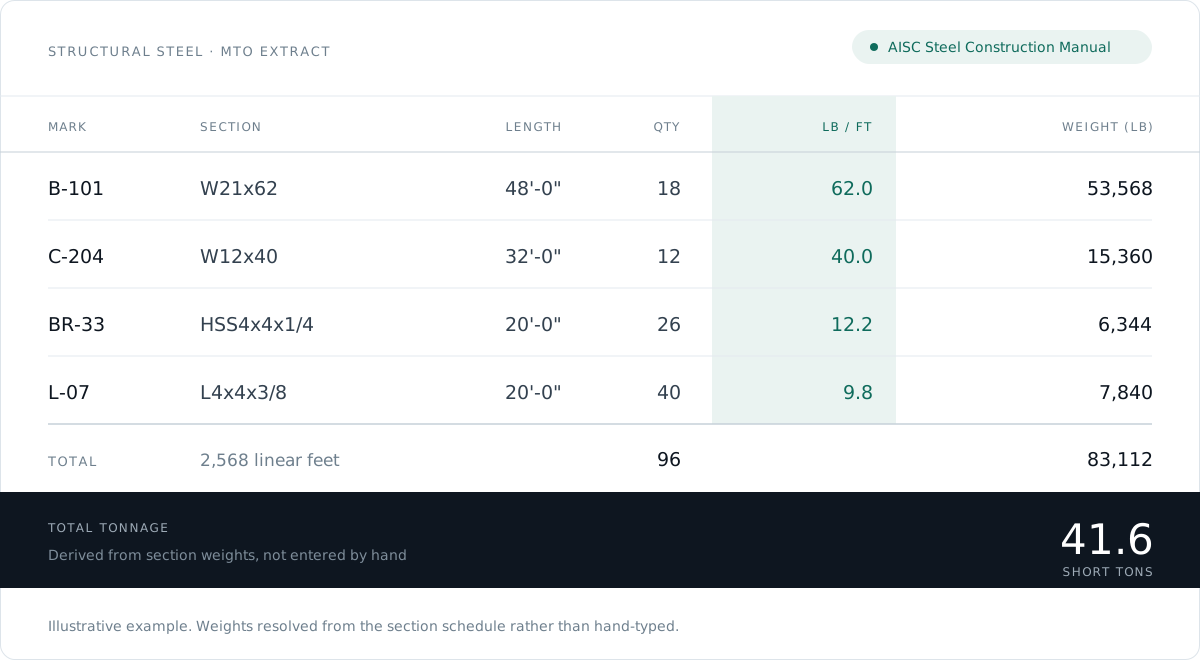
Illustrative example. Section weights are keyed to AISC shape designations and multiplied by length and piece count, so tonnage is derived rather than typed.
Click Any Quantity and Land on the Member It Came From
Estimators do not stake a bid on a black box. Every count and every length traces back to the member on the sheet it was read from, with the source sheet, the grid location, and the rule that produced it sitting next to the figure.
Adjust a count and the trail stays intact, which matters in a scope review when someone asks where the tonnage came from and the answer has to be better than a spreadsheet cell.
- Every figure links to its member and its source sheet
- Corrections logged with the original read preserved
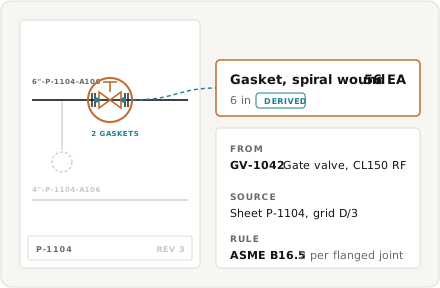
Illustrative example. Nothing derived arrives without the joint that produced it and the rule that set the count.
Bid Volume Keeps Rising While the Estimating Bench Keeps Thinning
Steel work is not slowing down, but the bench of estimators who can take off a package by hand gets thinner every year, and the ones you have set the ceiling on how many jobs you chase. When a package takes days to count, you bid fewer of them and pass on work you could have won. Software that does the counting turns a fixed-capacity desk into one that can look at more work without more hires.
Capacity, not opportunity, sets the ceiling on how much you can bid.
Trusted by 200+ enterprises across EPC, Infrastructure, and Energy











Structural Steel Estimating Software
theTakeoff reads your steel drawings and returns a takeoff you can audit line by line. Count every member, measure every length, and reconcile the drawings against the schedule and the RFP package.
Drawing Takeoff Software | theTakeoff by ContraVault AI
Drawing takeoff software that reads your drawing set and returns an auditable count. See what the AI actually does, what the free and free download options really are, and which drawing types come off one read.
Piping Estimating Software
Piping estimating software that reads your drawings and returns an auditable count. See what the AI actually does, how the line number becomes a priced line item, and where the estimate still needs your estimator.
Steel Takeoff Software | theTakeoff by ContraVault AI
What does steel takeoff software do?
It reads a steel drawing set and produces the quantities. theTakeoff counts members by mark and section, measures lengths off the geometry, resolves weights from the schedule to roll up tonnage, and outputs a bill of material you can price from, with a source link behind every figure.
What makes AI steel takeoff software different from on-screen takeoff?
On-screen takeoff speeds up your clicking, and you are still the one identifying and measuring every member. An AI tool reads the sheets and produces the count itself, then hands it to you to verify. The work shifts from counting to checking, which is where the time saving comes from.
Is there free steel takeoff software?
Nothing free will read a set and count it for you. Free PDF viewers with a measuring tool, a spreadsheet, and published shape tables will get a small scope priced at the cost of your own hours. Our AISC section weight tables are free with no signup, and paid tools including theTakeoff offer trials.
Can I get an AI steel takeoff software free download?
No, and anything presented as one is worth avoiding. Free installers of commercial takeoff packages are typically cracked or carry malware, which is a poor trade on a machine holding client drawings. theTakeoff runs in the browser, so there is no installer at all and a trial is just a login.
What should I look for in the best steel takeoff software?
Check where the numbers come from and whether you can audit them. A tool worth buying resolves a mark to a published section weight, links every quantity to the member and sheet it was read from, has a stated position on connection material, reconciles the drawings against the schedule, and can tell you its measured accuracy by member class.