General Conditions in Construction | The Takeoff AI
What general conditions cover in a construction estimate, how they differ from overhead and general requirements, and how to estimate them from job duration.
Industrial contractors often call these field indirects. The costs are the same, only the name differs.
How to Estimate General Conditions
General conditions are easy to underestimate because nothing on the drawings shows them. The reliable way to build them is to tie each cost to what drives it, which for most lines is time on site.
Set the Job Duration
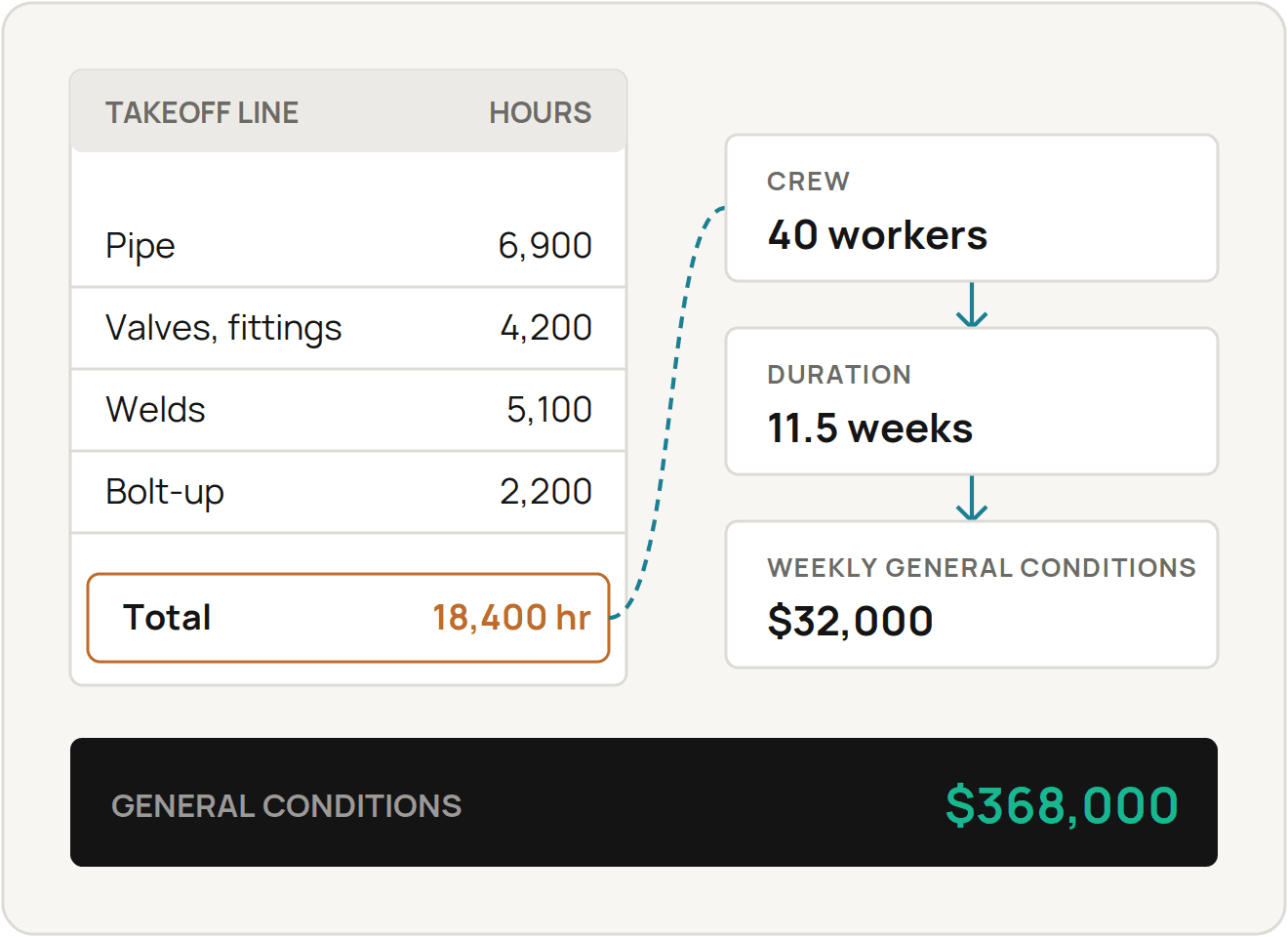
Work out how many weeks the project runs, from the labor hours in the takeoff, the crew size and the schedule the owner has set.
Split Time-Driven From Fixed Costs
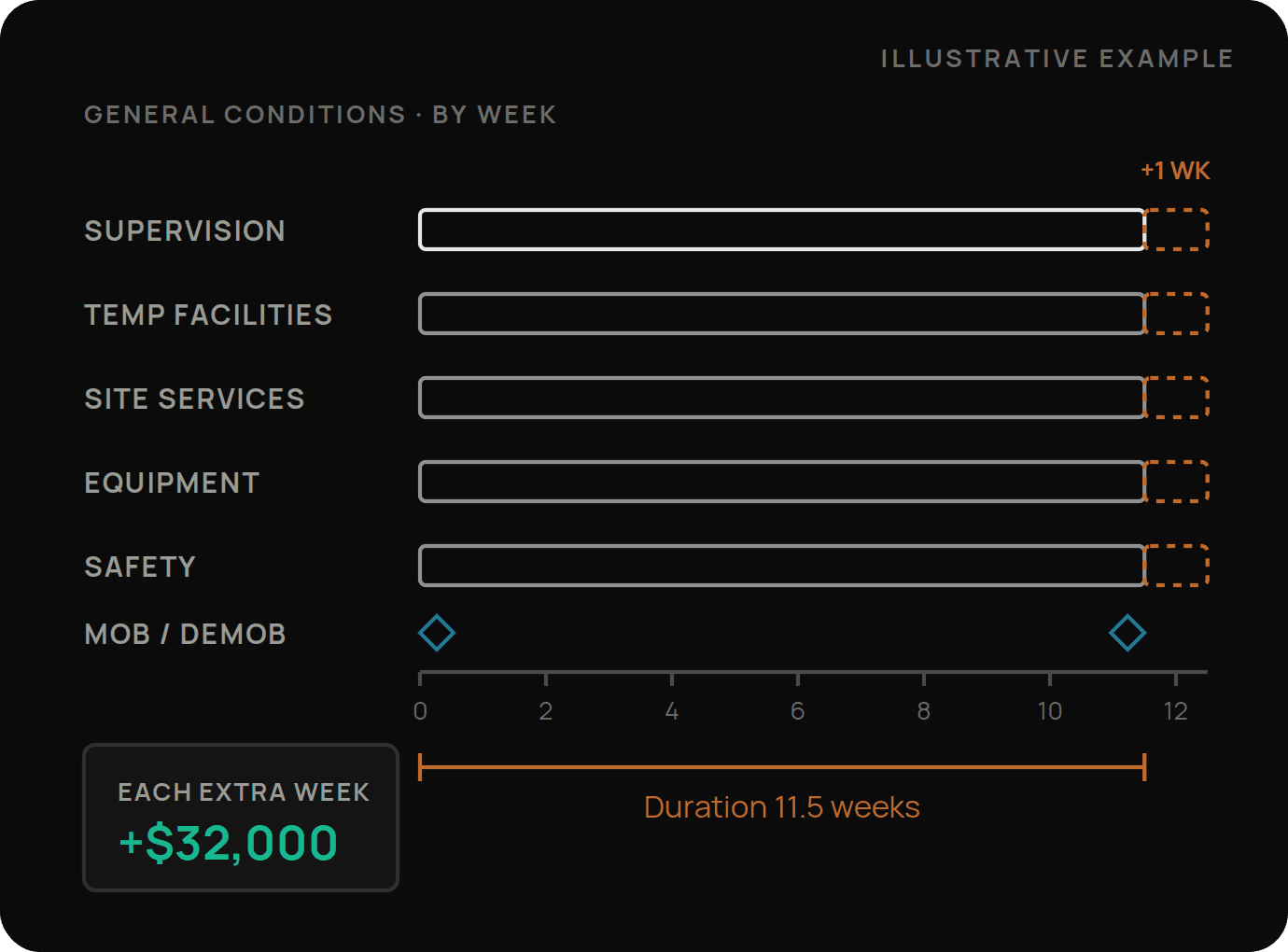
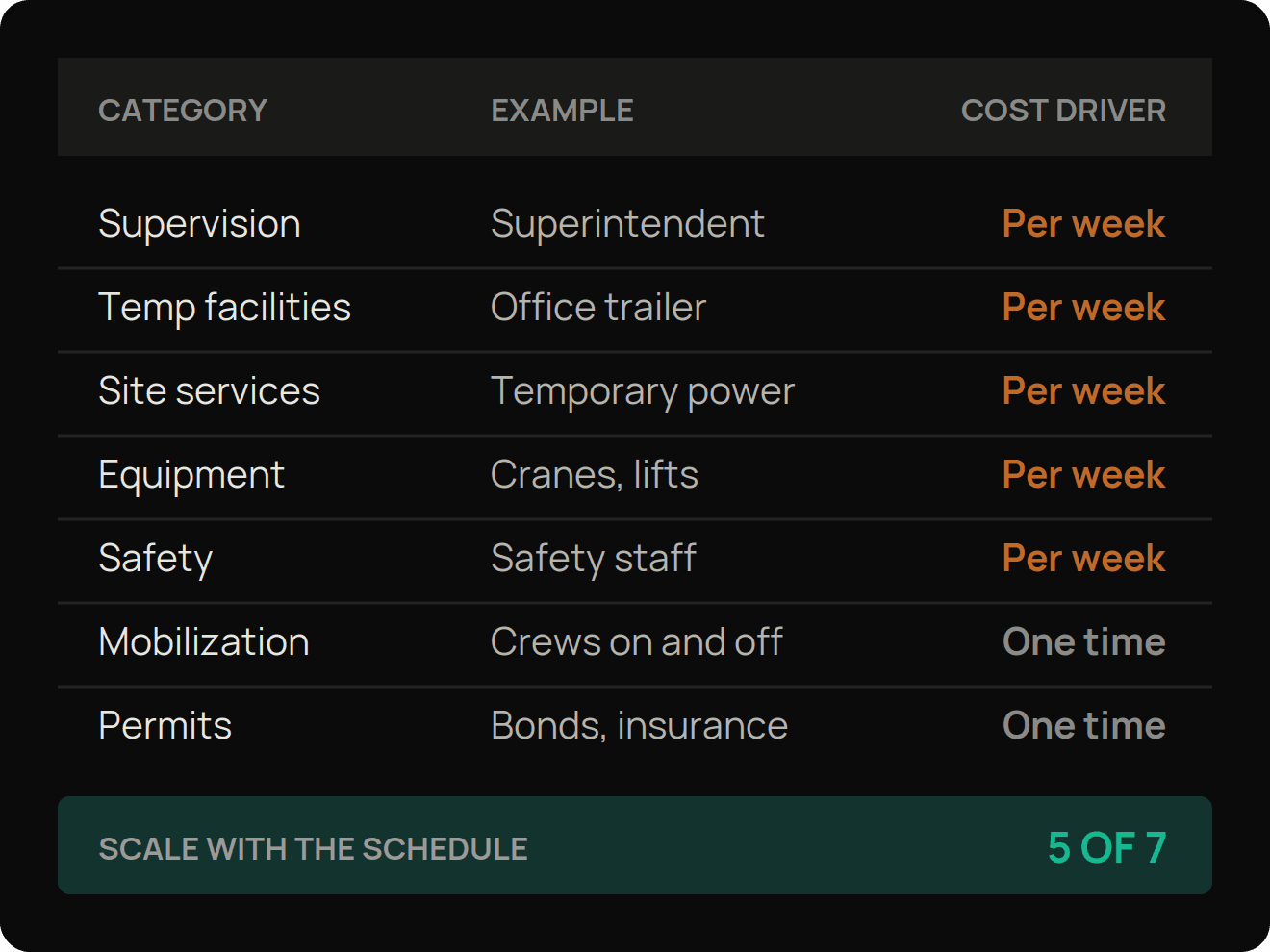
Supervision, trailers, equipment rental and site services cost a set amount per week. Mobilization, demobilization, permits and setup are paid once.
Price Each Line
Multiply the weekly costs by the duration, add the one-time costs, and check the total against what similar jobs carried.
What Goes Into General Conditions
The list changes with the job and the contract, but the same categories come up on almost every project. Sorting each line by its cost driver shows which costs will move when the schedule slips, and on most jobs that's the majority of them.
- Supervision and project staff, usually the largest line
- Temporary facilities, utilities and site services
- Equipment, safety and one-time mobilization costs
Why General Conditions Start With the Takeoff
Most general conditions are priced per week, so the whole line rests on how long the job runs, and the duration rests on the labor hours in the takeoff. If the takeoff misses material, the hours come in short, the schedule comes in short, and the general conditions come in short along with it.
The Takeoff AI builds the full material takeoff from the package, including items the spec requires but nobody draws, and prices labor off your own rates. That gives you a labor-hour total you can trace line by line, which is the number your duration and your general conditions are built on.
- Labor hours traced back to every line of the takeoff
- Priced off your own labor rates
Schedules Are Tight and Every Extra Week Costs Money
Owners are pushing compressed schedules, and each week a job runs past plan adds a full week of supervision, rentals and site services. Estimators who tie general conditions to a defensible duration protect the margin that a flat percentage quietly gives away.
General conditions are only as accurate as the duration behind them.
Trusted by 200+ enterprises across EPC, Infrastructure, and Energy











Reference The Estimating Library
Practical takeoff references, charts and workflow guides, built for working estimators.
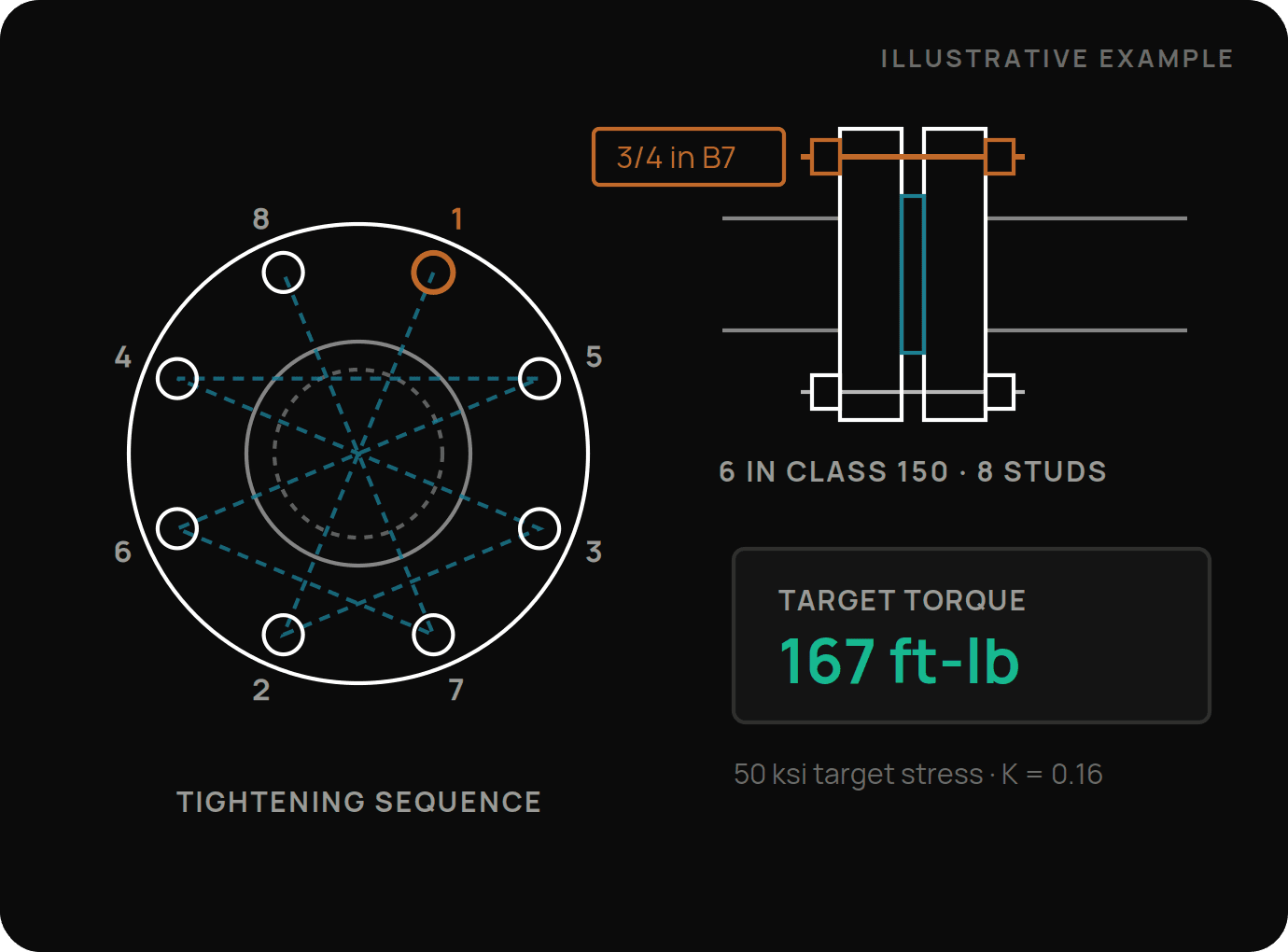
Bolt Torque Chart for Flange Bolting | ASME B16.5 | The Takeoff AI
Target torque for A193 B7 stud bolts on ASME (American Society of Mechanical Engineers) B16.5 flanges, worked from bolt size and target stress. Use it to check a bolting procedure or to size bolt-up work in an estimate, and take the final field value from the joint's own procedure.
https://www.thetakeoff.ai/pipe-schedule-chart
Bid Management Software for Estimators | The Takeoff AI
Manage the complete bidding workflow — from bid invitations and RFP review to estimating, subcontractor coordination, and final proposal submission. The Takeoff AI helps contractors identify opportunities, analyze bid documents, extract scope, and prepare accurate bids faster.
General Conditions in Construction | The Takeoff AI
What are general conditions in construction?
They are the job-site costs of running the project that can't be charged to a single scope of work, such as supervision, temporary facilities, equipment, site services and mobilization. They sit in the estimate alongside the direct cost of labor and material.
What is the difference between general conditions and overhead?
General conditions are costs of one specific job, paid for on or near that site. Overhead is the cost of running the company, such as the main office, company staff and software, spread across every job.
Are general conditions the same as general requirements?
They overlap and are often used interchangeably. General requirements usually means Division 01 of the CSI (Construction Specifications Institute) MasterFormat, which lists what the project spec asks for, while general conditions usually means the cost of meeting those requirements.
What are the general conditions of a contract?
The term also names a contract document, most often AIA (American Institute of Architects) A201, which sets out the rights and duties of the owner, contractor and architect. It's a different use of the same words, and it's about terms rather than cost.
How much are general conditions on a construction project?
It depends on the job's size, length and location, so the reliable method is to build them from the duration line by line. Percentage ranges are a sanity check at best.