ASME B16.5 Flanges: Classes, Ratings and Sizes | The Takeoff AI
ASME B16.5 is the flange standard published by the American Society of Mechanical Engineers, covering pipe flanges and flanged fittings from NPS (nominal pipe size) 1/2 inch through 24 inch. It sets the classes, dimensions, facings and pressure-temperature ratings that your spec points at, which means it also decides a good part of what lands on your material takeoff.
Above NPS 24, large diameter flanges are covered by ASME B16.47 instead.
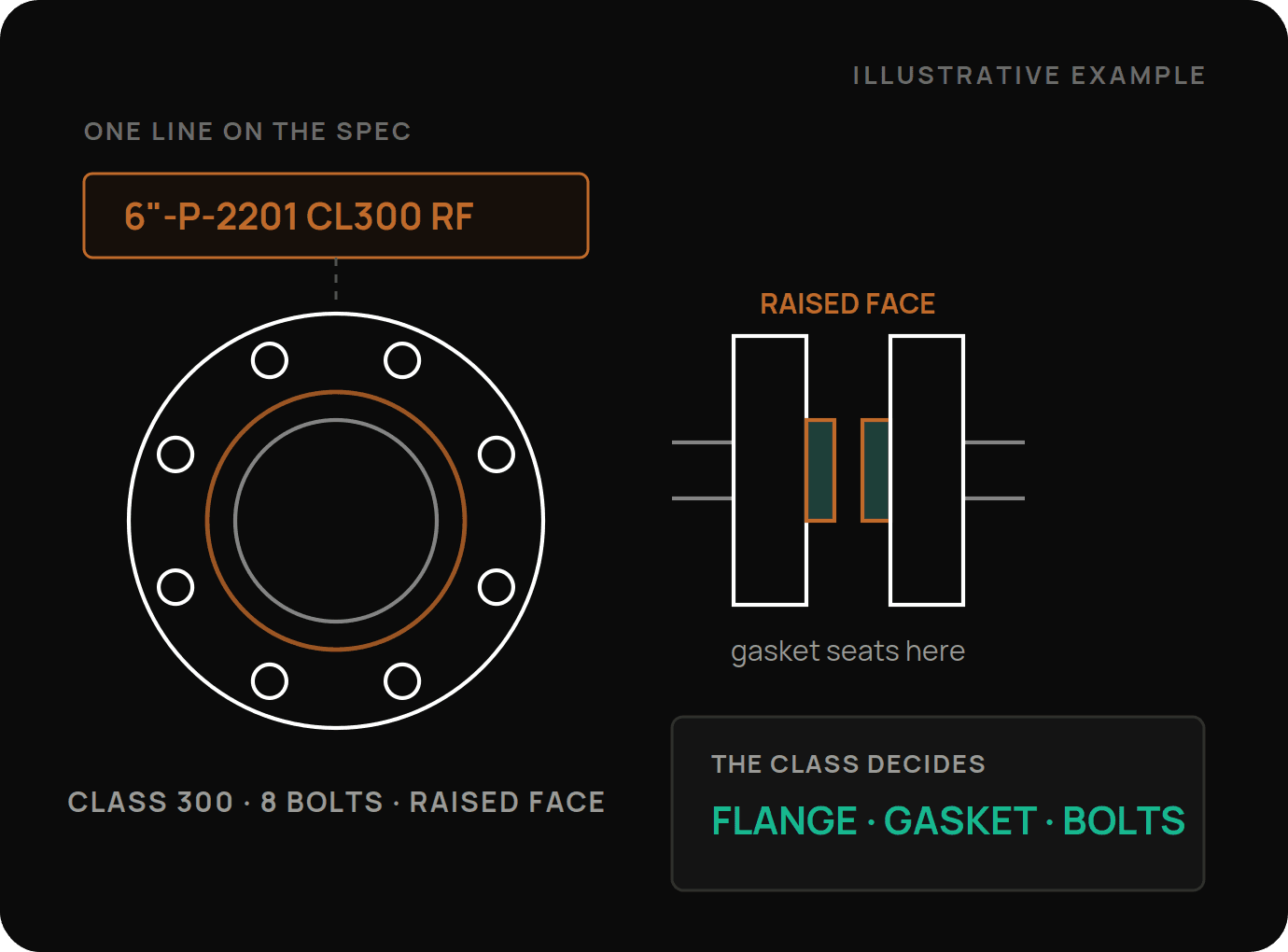
What ASME B16.5 Sets
The spec names a class and a facing, and the standard turns that into dimensions you can count and buy.
Pressure Classes
Seven classes: 150, 300, 400, 600, 900, 1500 and 2500. The class is a rating designation rather than a pressure in pounds per square inch, so a Class 150 flange holds a different pressure depending on material and temperature.
Pressure-Temperature Ratings
Each class has a rating table by material group, and the allowable pressure drops as temperature rises. Two flanges of the same class in different materials are not interchangeable on rating.
Flange Types and Facings
Types include weld neck, slip-on, socket weld, threaded, lap joint and blind. Facings include raised face, flat face and ring type joint, and the facing decides which gasket goes with it.
The Seven Classes and Where Each Sits
The class in your line designation drives the flange itself, the gasket, the bolting and the weld, so it's the single value that cascades furthest through a piping takeoff. Bolt counts, diameters and stud lengths by class sit on the flange bolt chart page.
- Covers NPS 1/2 through 24, with B16.47 above that
- Ratings vary by material group and temperature
- Ring type joint facings are tabulated for every class, so the facing comes from your spec rather than the class
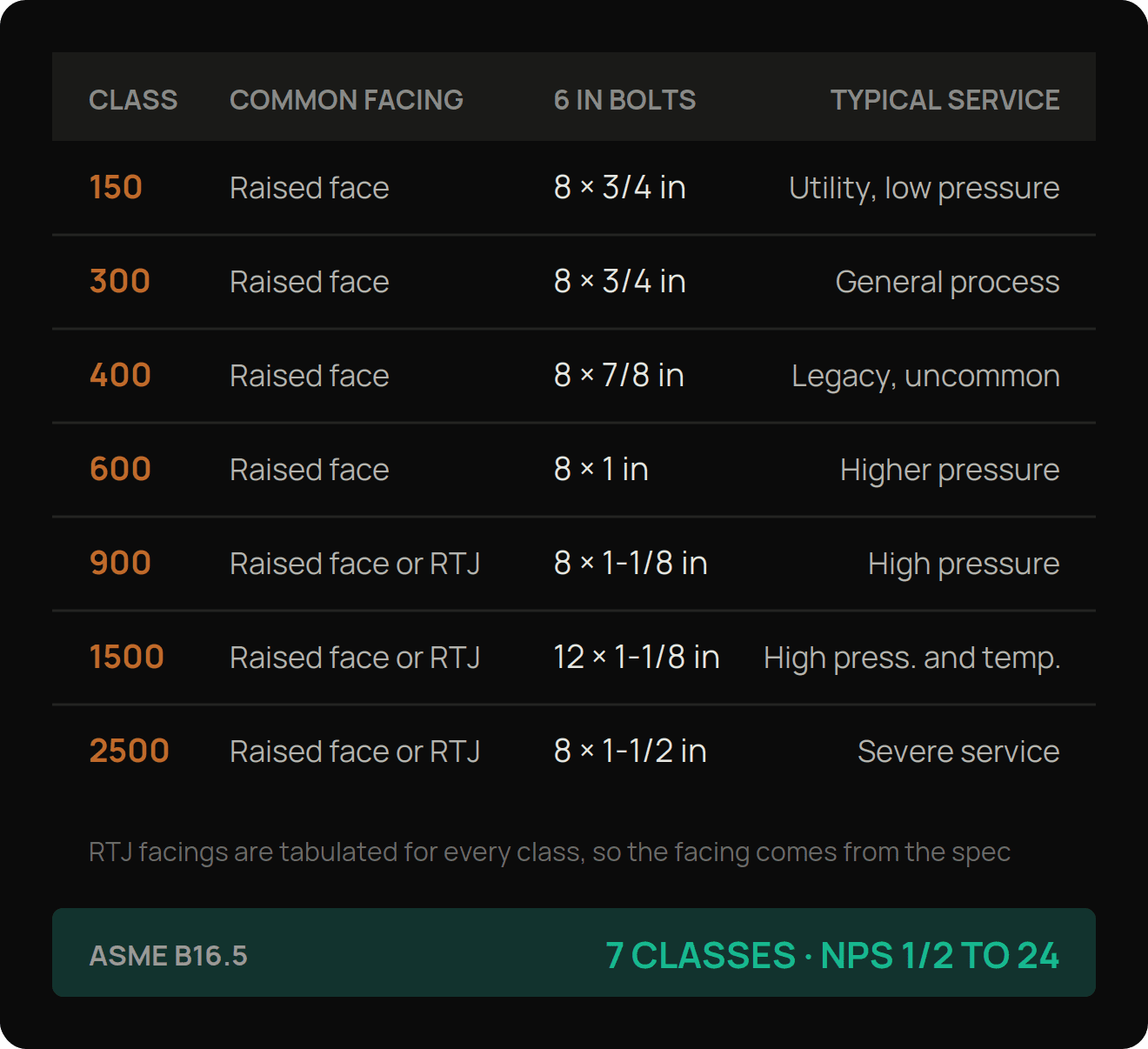
The seven classes, covering NPS 1/2 through 24.
Why the Flange Class Drives the Material List
One flanged joint in a Class 300 line brings a flange, a gasket matched to the facing, a stud bolt set sized to the class, and a weld to attach it. None of the three derived items appear on the drawing as symbols, so they depend on someone reading the class off the line designation and remembering what it requires.
The Takeoff AI reads the line designation and the spec, resolves the gasket, bolting and weld from the class, and traces each one back to the joint it belongs to. Your estimator checks the count against the spec, applies your own rates, and the flange scope is priced without anyone working through class tables by hand.
- Gasket, bolting and weld derived from the class on the line
- Every derived line traced to its joint and its rule
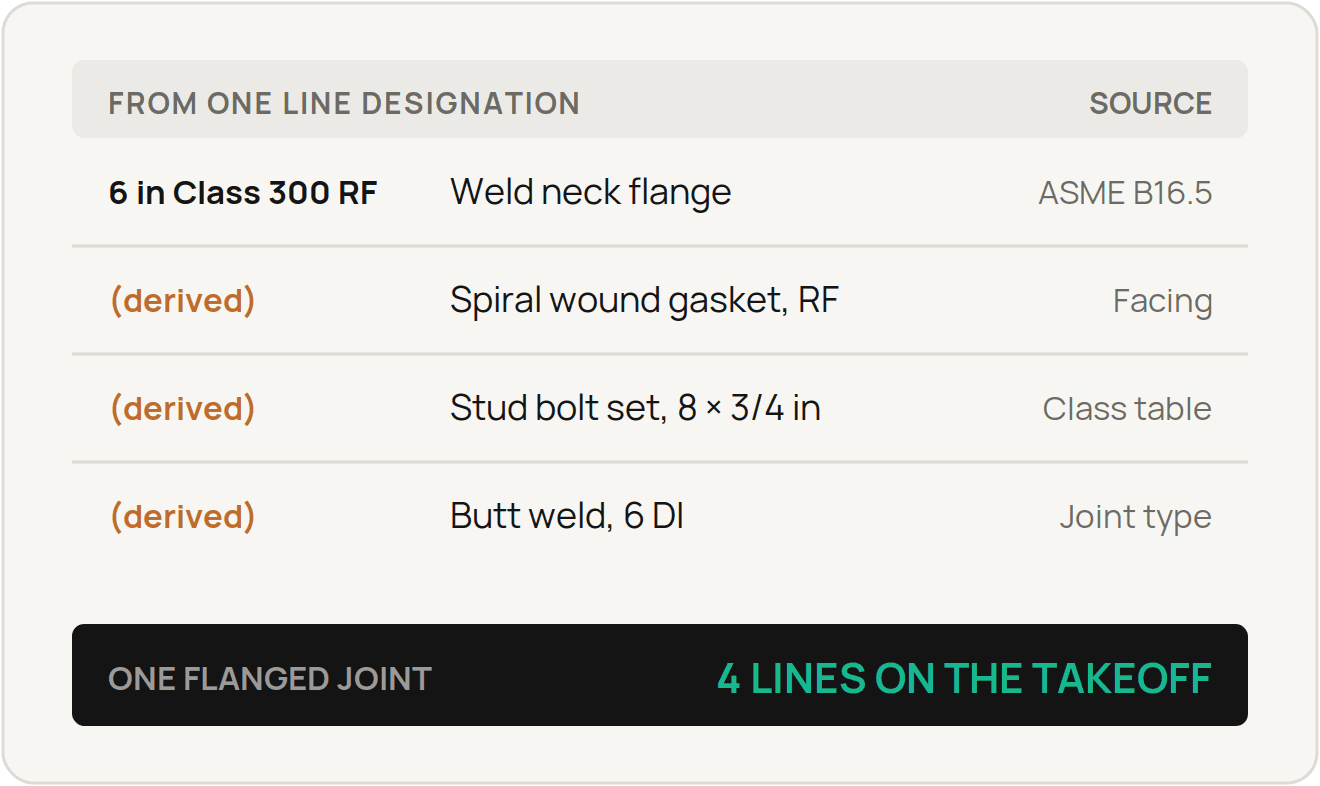
Illustrative example. The class on the line drives four lines on the takeoff.
The Class Table Is Public, the Hours Spent on It Are Yours
Nothing in B16.5 is secret, and every estimator can look up what a Class 300 joint needs. The cost is the looking up, repeated across hundreds of joints in a package, which is time that doesn't improve the bid and is exactly the work that gets skipped when a deadline closes in.
The standard is the same for everyone, and the hours spent applying it are not.
Trusted by 200+ enterprises across EPC, Infrastructure, and Energy











Reference the Estimating Library
Practical takeoff references, charts and workflow guides, built for working estimators.
/handbook/flange-bolt-chart
Bolt Torque Chart for Flange Bolting | ASME B16.5 | The Takeoff AI
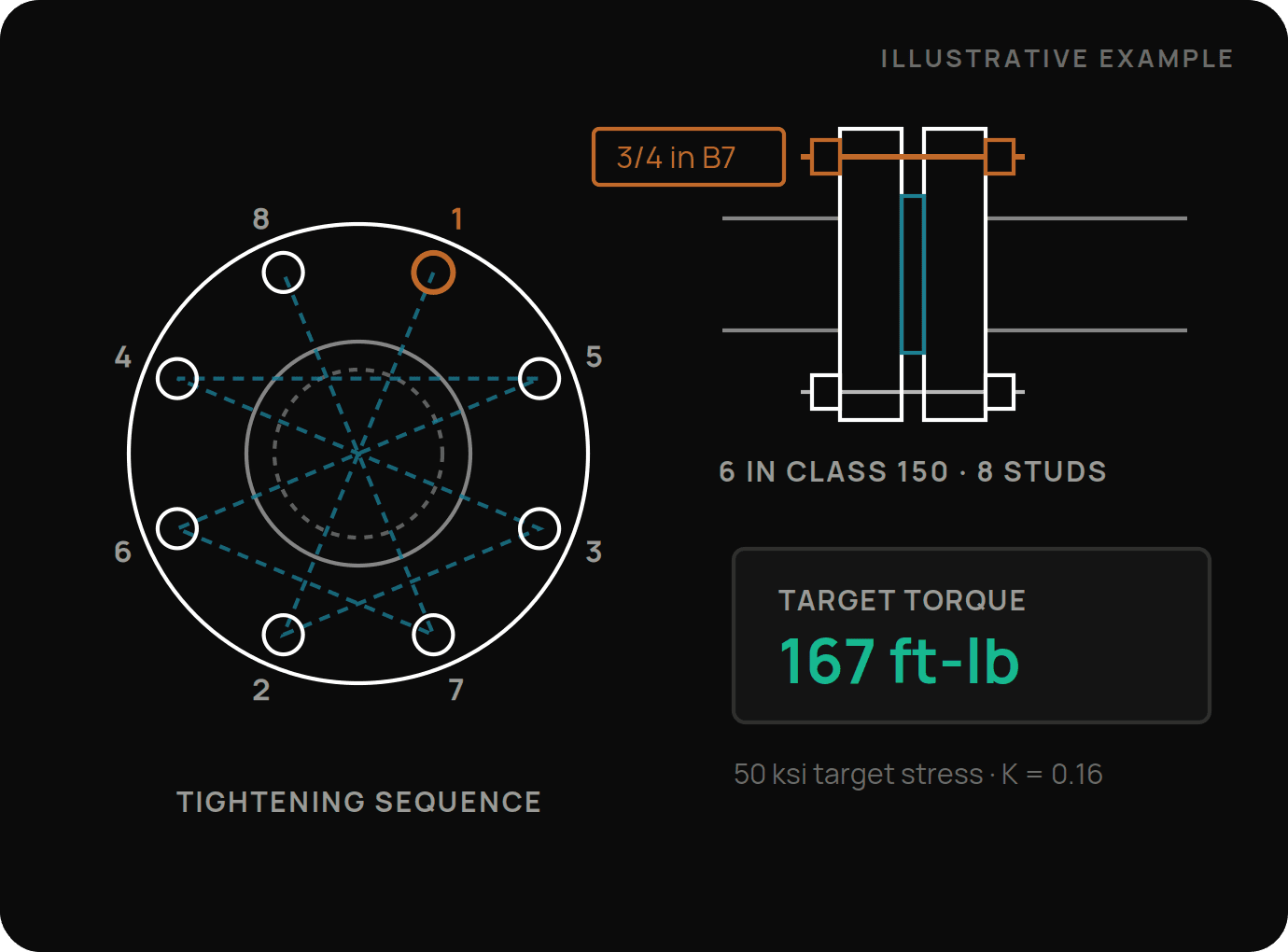
Target torque for A193 B7 stud bolts on ASME (American Society of Mechanical Engineers) B16.5 flanges, worked from bolt size and target stress. Use it to check a bolting procedure or to size bolt-up work in an estimate, and take the final field value from the joint's own procedure.
https://www.thetakeoff.ai/pipe-schedule-chart
ASME B16.5 Flanges: Classes, Ratings and Sizes | The Takeoff AI
What is ASME B16.5?
The standard for pipe flanges and flanged fittings from NPS 1/2 through 24, covering pressure-temperature ratings, materials, dimensions, tolerances, marking and testing. Most industrial piping specs reference it directly.
What are the ASME B16.5 pressure classes?
Seven: 150, 300, 400, 600, 900, 1500 and 2500. Higher classes mean thicker flanges, larger bolting and a higher allowable pressure at a given temperature.
Does Class 150 mean 150 psi?
No. The class is a rating designation, and the actual allowable pressure depends on the material group and the operating temperature, which you read off the pressure-temperature rating table for that material.
What is the difference between ASME B16.5 and B16.47?
Size. B16.5 covers NPS 1/2 through 24, and B16.47 covers large diameter flanges above NPS 24, in Series A and Series B.
What is the difference between raised face and ring type joint?
Raised face seats a flat gasket on a raised area around the bore and is the common facing on lower classes. Ring type joint uses a metal ring seated in a machined groove, which suits higher pressure and temperature service. The gasket, the bolt length and the cost all change with the facing.
How many bolts does a B16.5 flange have?
It depends on the size and the class, from four on small low class flanges up to twenty and more on large ones. The full count and diameter by size and class sit on the flange bolt chart.