Introduction
A steel fabrication estimate is not one number, it is four that have to agree. Tonnage by size group sets the mill order. Connection material sets the plate and bolt. Shop hours set the schedule and the largest line on the sheet. Coating area sets the paint or galvanizing subcontract. Get the member count right and the connection weight wrong, and the bid still goes out light. AI has moved into steel faster than most trades because the drawings cooperate. A section designation, a column schedule, and a connection detail follow rules a machine can read. This guide covers the five platforms worth knowing in 2026 for steel fabrication estimation, what each does well, and which shop it fits. 
Why Steel Fabrication Estimating Needs AI
Steel bids are decided inside a few percent, and the estimate usually goes wrong in the same places. Connection material is the first. SteelFlo puts the gap at 8 to 15 percent when a takeoff tracks main members and ignores connection weight. Shear tabs, clip angles, stiffeners, base plates, and the bolts that go with them are real tonnage and real shop hours, and they rarely appear as a clean schedule. On a 600-ton job that gap is the margin.
Shop labor is the second, and it is the bigger number. A fabricator does not sell steel, it sells hours per ton, and the hours move with complexity rather than weight. Moment connections, heavy copes, camber, and skewed connections cost far more per ton than repetitive beam-to-column framing. Estimates built on one blended rate across the whole package are wrong in both directions at once, and the shop finds out on the floor.
Two more get missed at the margins. Waste and drops get a flat 5 percent applied across wide flange, HSS, and plate even though the three nest nothing alike, and coating gets priced off tonnage when the painter bills square feet, so a package heavy in small members runs high on surface area per ton.
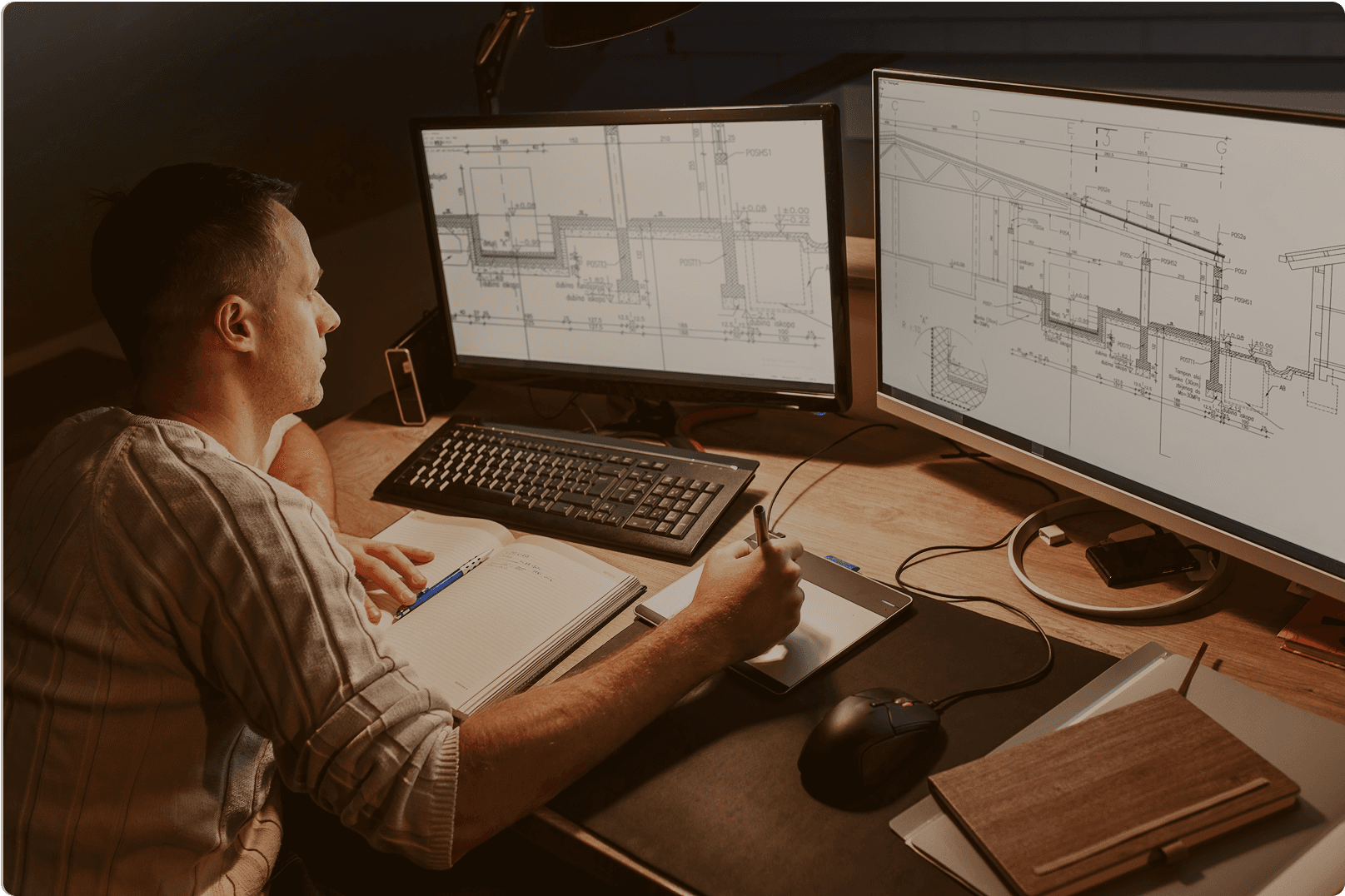
Underneath all of it is a manual takeoff. An estimator opens the S-sheets, clicks through every beam, column, brace, and plate, records the designation, looks up the weight, and builds the bill of materials by hand. On a 200-member package that is most of the day, and on a set with no column schedule it is longer, because columns have to be traced through elevations. When a revision lands on a Thursday for a Monday bid, most of that work happens again.
The workforce math is not on the fabricator's side either. 76% of estimator seats turn over by 2034, and in The State of Industrial Estimation 2026, a survey of 312 estimators at US industrial contractors, 64% of teams said their hardest scope depends on one or two people whose method lives in their head. In a fab shop that is usually the estimator who knows what a given detailer's connections really cost to fabricate. When he retires, the method leaves with him unless it is written down somewhere.
The AI Steel Fabrication Estimating Tools
1. 2. TheTakeoff AI
TheTakeoff.AI is an AI takeoff and estimating engine built for industrial fabrication, where a steel package arrives alongside the piping, supports, and equipment it carries. Pipe racks, platforms, ladders and cages, equipment structures, and modular skids are its core work, and on dense drawing sets it cuts estimating time by 80 percent. Most estimating software was built for rooms and walls. It measures area and length well, and it has nothing to say about a rack package where steel tonnage, support spacing, and the piping running through it all have to be reconciled before a number goes out.
TheTakeoff.AI reads the full drawing set and automates the takeoff. Members come straight from the schedules where a schedule exists, with weights validated against AISC section profiles. Connection material, welds, bolts, and supports are factored from member type, framing condition, and spec using engineering ratios, the same method a senior estimator applies by hand when he adds a percentage for connections and knows why that percentage is what it is. Every count is traceable. Click any number and it shows the exact member, weld, or support it came from, on the exact drawing, with the standard behind the figure alongside it. Nothing in the estimate is a black box, which matters when a project manager questions the connection allowance six months after award.
Review is the workflow rather than a cleanup step. An estimator accepts, rejects, or corrects a batch of members in a single pass, and every correction teaches the engine, so the second package from a repeat detailer starts closer than the first. Output arrives as a priced estimate ready to feed whatever fabrication management or cost tracking system the shop already runs. Best suited to industrial and petrochemical fabricators, pipe rack and modular shops, and specialty fabricators whose steel scope shares a package with mechanical work.
2. Tekla PowerFab
Tekla PowerFab by Trimble covers the fabrication lifecycle rather than takeoff alone, which is why most large fabricators already run it. Estimating and job costing, production scheduling, nesting and material optimization, purchasing, inventory, production tracking, and shipping sit in one platform, so an estimate written at bid time becomes the job cost baseline the shop is measured against later. Its model-based estimating module pulls quantities straight from a Tekla Structures model instead of manual entry, and supplier database access keeps material pricing current on bid day. For a shop already working inside 3D modeling software for steel, the design-to-shop chain here is the strongest on this list. Best suited to fabricators with the tonnage to justify an enterprise system of record.
3. Steel Genie by ALLPLAN
Steel Genie launched in April 2026 from ALLPLAN, part of the Nemetschek Group, for fabricators who would rather bid off a model than a spreadsheet. It analyzes a structural drawing set, detects members, and generates quantities plus an estimating-level 3D model in minutes. Its connection engine is based on the AISC Design Guide, so shear tabs, clips, and base plates come through as designed material rather than a percentage allowance, which is the part of a steel estimate that usually gets guessed. Output flows into the ALLPLAN ecosystem, so estimating feeds detailing and production planning downstream. Strongest fit for shops already inside ALLPLAN or moving there.
4. SteelFlo
SteelFlo is a self-serve AI takeoff tool focused entirely on structural steel. Upload a PDF and it returns member-by-member detection with weight lookups, connection counts, and coating detection, each item carrying a confidence score and a bounding box on the source page so an estimator can verify a number without hunting for it. It validates against a database of AISC section profiles and auto-detects which standard a drawing set uses across AISC, EN, BS/IS, and AS/NZS, which matters for shops quoting off imported or foreign-detailed drawings.
In its published comparison against a human estimator on a seven-page US structural package, the engine returned 53 detections across 18 member types where the estimator found 41 across 17. Pricing is published rather than gated behind a demo call, so a shop can test it on a live package this week. A practical starting point for small and mid-size fabricators on commercial building steel.
5. Ferra
Ferra is the newest of the five, built by a steel-only team, and it starts a step earlier than the rest. Its Bid Intelligence layer scores a drawing set for risk and pulls scope before the shop commits to bidding at all, flagging the packages heavy in the connection types and site conditions that historically eat shop hours. Validated takeoffs convert into 3D models, and the click-through from a line item to the detail callout is quick. Worth a look where the bottleneck is bidding too much of the wrong work rather than counting members too slowly.
What AI Changes in Fabrication Cost Analysis
Detection is the visible half and the smaller one. A member list only becomes a fabrication estimate once material is priced by size group against current mill and service center pricing, drops and waste are applied by shape rather than as one flat factor, connection material is added as designed weight, shop hours are set by complexity, and coating, freight, and erection go on top. Steel pricing moves month to month, so an estimate carrying last quarter's rates is wrong even when every count is right. Construction automation earns its place when it carries a number all the way from a callout on sheet S-201 to a line on the bid with the trail intact, and then to the job cost report the shop is judged on afterward. That is also the practical test before buying anything. Take a package already bid, fabricated, and closed out, run it through the tool, and compare tonnage by member type and connection weight against what was actually bought and burned. Every vendor demo runs on clean drawings, and the next real drawing set will not be clean. Project management AI and shop scheduling platforms sit beside this rather than inside it. Fixing the takeoff first pays more, because a production schedule built on the wrong hours per ton is confidently wrong.
FAQs
What is steel estimation software?
Steel estimation software turns structural drawings into a priced bill of materials: member counts and tonnage by size group, connection material, bolts, coating area, shop labor hours, and erection. Platforms such as Tekla PowerFab and STRUMIS handle the costing and production side well but leave the reading manual. AI tools like TheTakeoff.AI automate the reading and hand the estimator a first pass to verify.
How does AI handle connection material?
It depends on the tool, and this is the question worth asking every vendor. Steel Genie designs connections against the AISC Design Guide and returns real weight. Others detect connection callouts and count them. Some still leave connections to a percentage allowance the estimator applies afterward, which is where the 8 to 15 percent gap comes from.
Can artificial intelligence in construction replace a steel estimator?
No. AI produces the first count, and the estimator applies judgment on fabrication complexity, detailer quality, shop capacity, site conditions, and the scope that never appears on a sheet. A takeoff that is 80% accurate still needs 100% human review, which is why the verification workflow matters more than any detection headline.
Does AI takeoff work with 3D modeling software for steel?
It depends on the tool. Steel Genie generates an estimating-level 3D model and feeds ALLPLAN detailing, and PowerFab pulls quantities from Tekla Structures models directly. Several AI entrants export to CSV and Excel only, so confirm the handoff into Tekla, SDS/2, or STRUMIS before assuming it is clean.
Are smart construction technologies worth it for a small fab shop?
Usually, yes. Run the math on actual volume: estimator hourly cost multiplied by hours saved per takeoff, multiplied by packages quoted per month, then add the value of one additional bid submitted. With estimator turnover running at 76% of seats by 2034, hiring the capacity instead gets harder every year.