Estimating Software for Mechanical Contractors
theTakeoff.ai reads your bid package, counts every component, and hands back a takeoff you review line by line before it goes anywhere. Piping is live today, and the rest of the industrial bid is shipping one trade at a time.
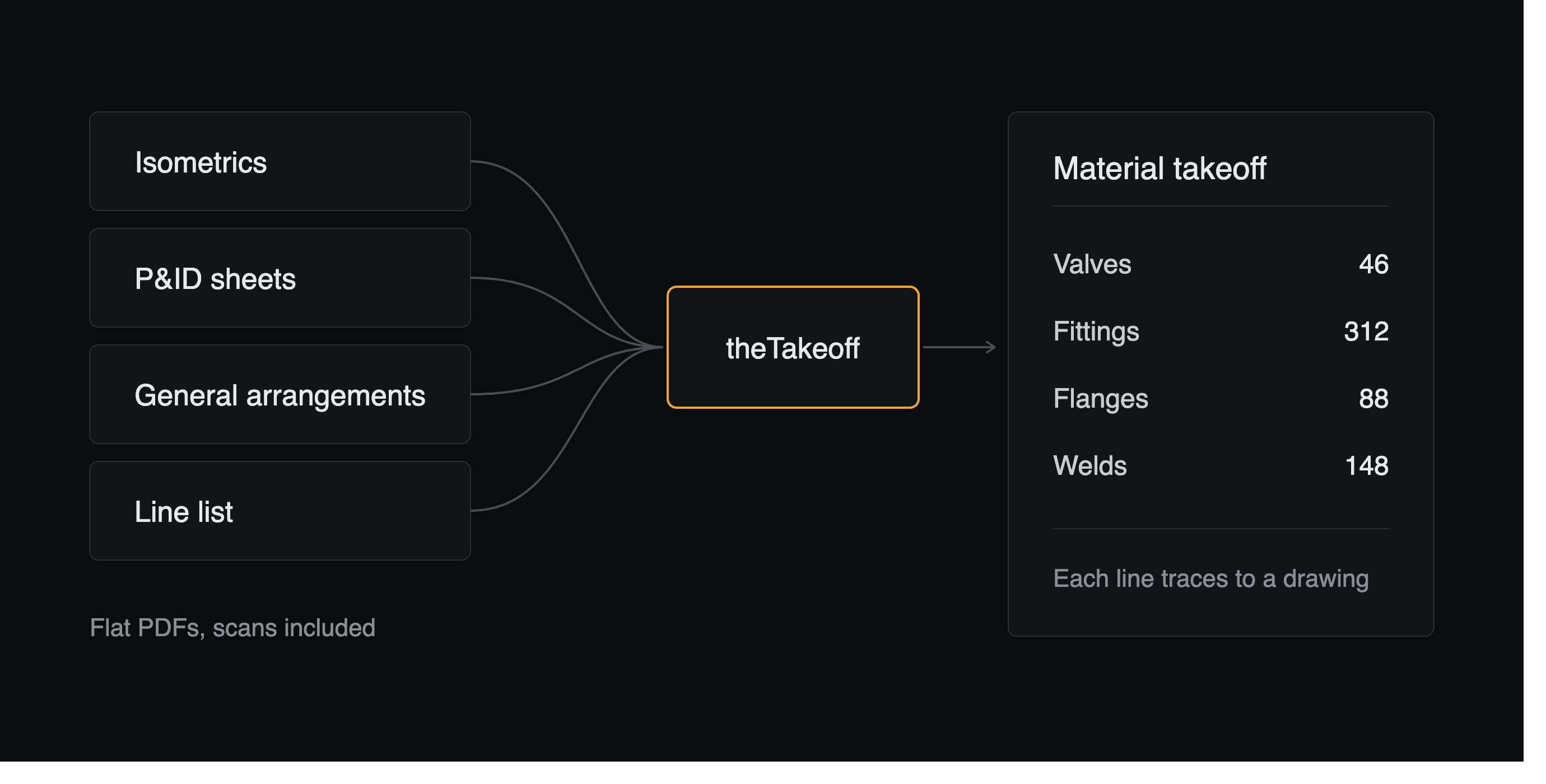
Drop in the package, and theTakeoff.ai reads every sheet, counts every component and measures the pipe, then shows each one beside the drawing it came from for you to accept, edit or reject.
Three Steps, and Your Estimator Owns the Last One
Mechanical packages arrive in whatever state the client had them in, so the takeoff has to start from what is actually in the file rather than from the drawings you wish you had.
Drop In the Drawing Set
Whatever the bid package gives you, so piping and instrumentation diagrams, isometrics, general arrangements or a 3D model, including scans and legacy sheets from decades ago.
theTakeoff.ai Extracts
Structure first and detection as a backstop, so quantities come out the way an estimator reasons through a set rather than from symbol matching alone. Anything it is unsure about is flagged rather than guessed.
Review and Sign Off
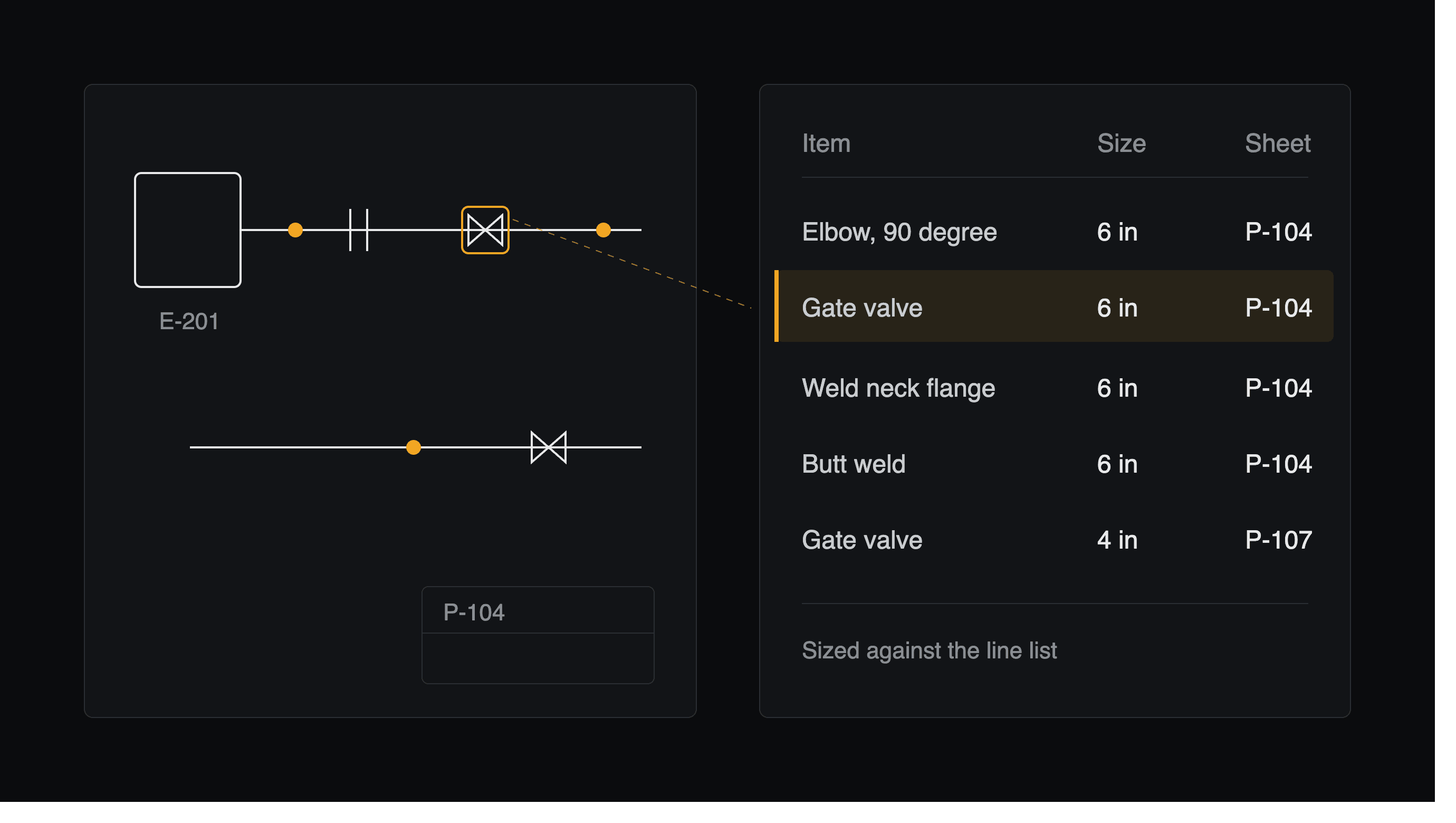
Every component sits beside the drawing it came from, marked and colour coded, so you accept, edit or reject each one and export the result into your estimate.
The Conflicts Are Already in the Package
Spec breaks, tie-ins and battery limits get flagged as theTakeoff.ai reads, and so do the places where the scope of work, the technical specifications and the drawings disagree, including the cross references running between them. Those conflicts were in the documents on day one, and they normally surface after award because nobody had time to chase every reference before the bid went out.
Capacity, Not Opportunity, Sets the Ceiling
A dense piping and instrumentation diagram takes a senior estimator 30 to 60 minutes by hand, and a process unit package carries 300 or more of them, so a single bid can eat 250 estimator hours before anyone prices a line. That is why the packages that arrive in a busy month get triaged rather than bid. Every one you cannot staff is a job you never competed for.
heTakeoff.ai automates the reading, and the estimator keeps the judgement.
Trusted by 200+ enterprises across EPC, Infrastructure, and Energy











Reference The Estimating Library
Practical takeoff references, charts, and workflow guides, built for working estimators.
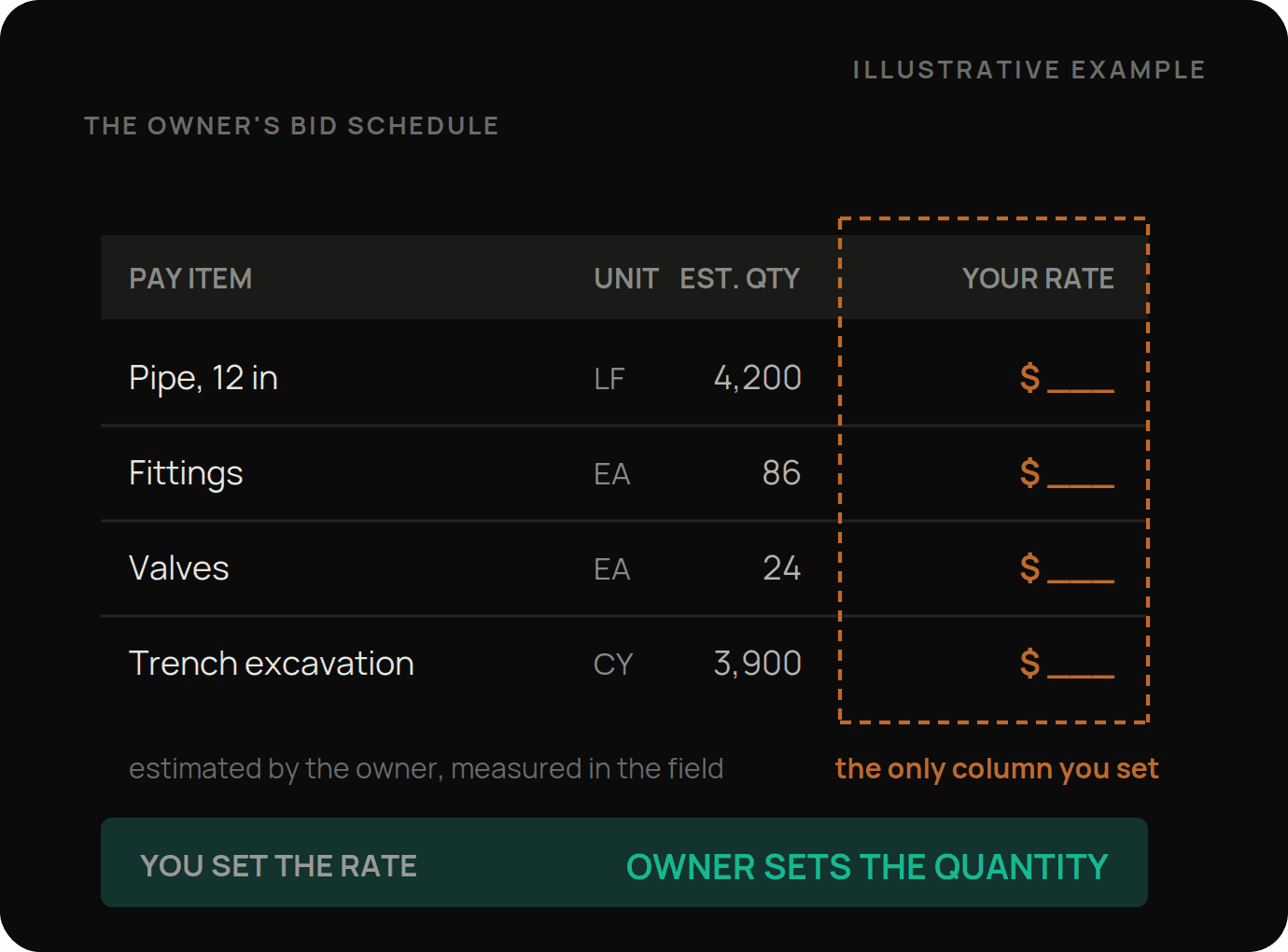
Unit Price Contract: How It Works and How to Bid One | The Takeoff AI
What a unit price contract is, how the bid schedule and unit rates work, who carries the quantity risk, and why checking the owner's quantities matters before you bid.
Weld Map: What It Is and How Welds Get Tracked | The Takeoff AI
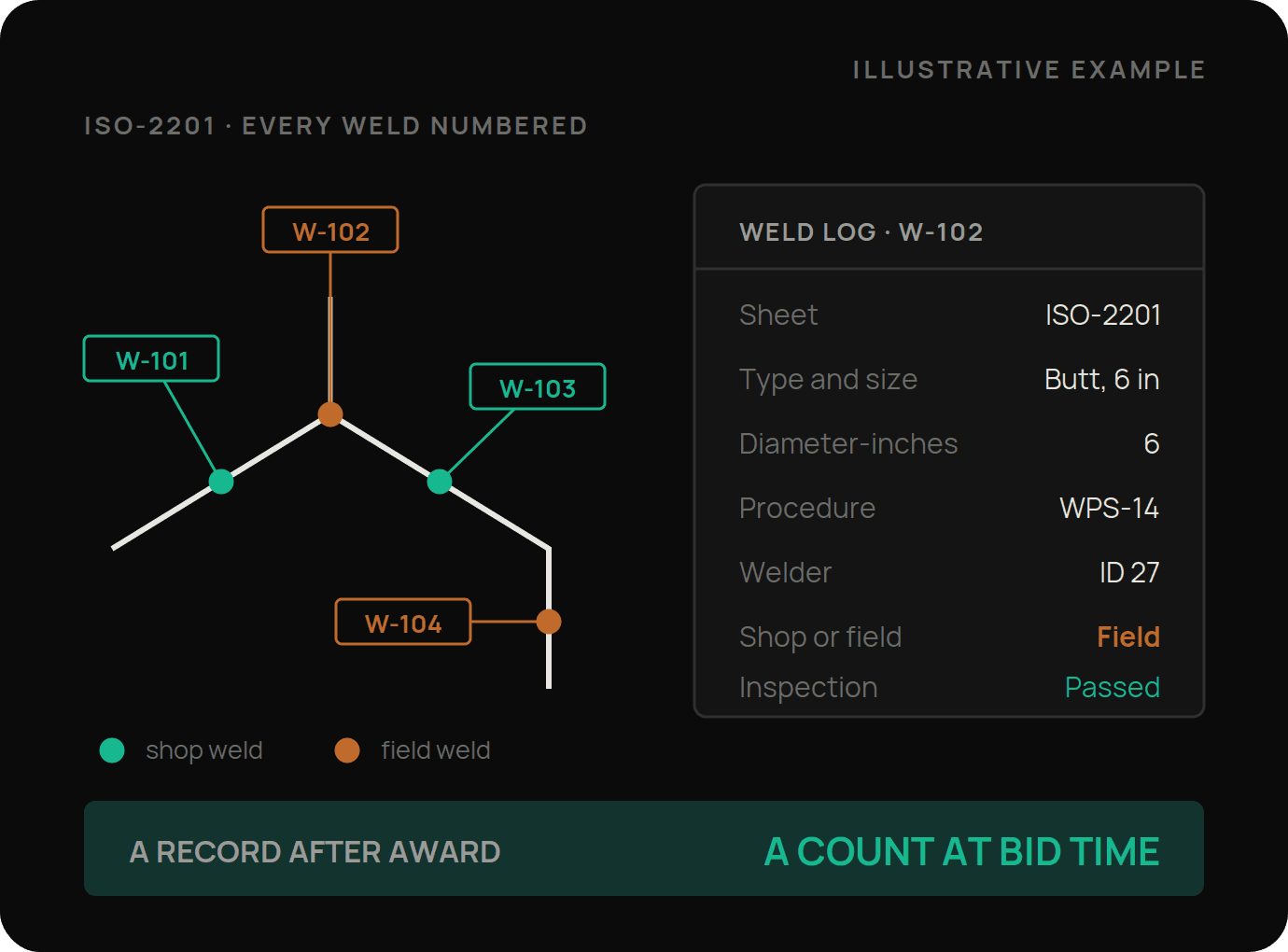
What a weld map is, how weld numbering works, what a weld log records, and how the weld count on the map feeds the labor in a piping estimate.
Pipe Rack: What It Is and How to Take One Off | The Takeoff AI
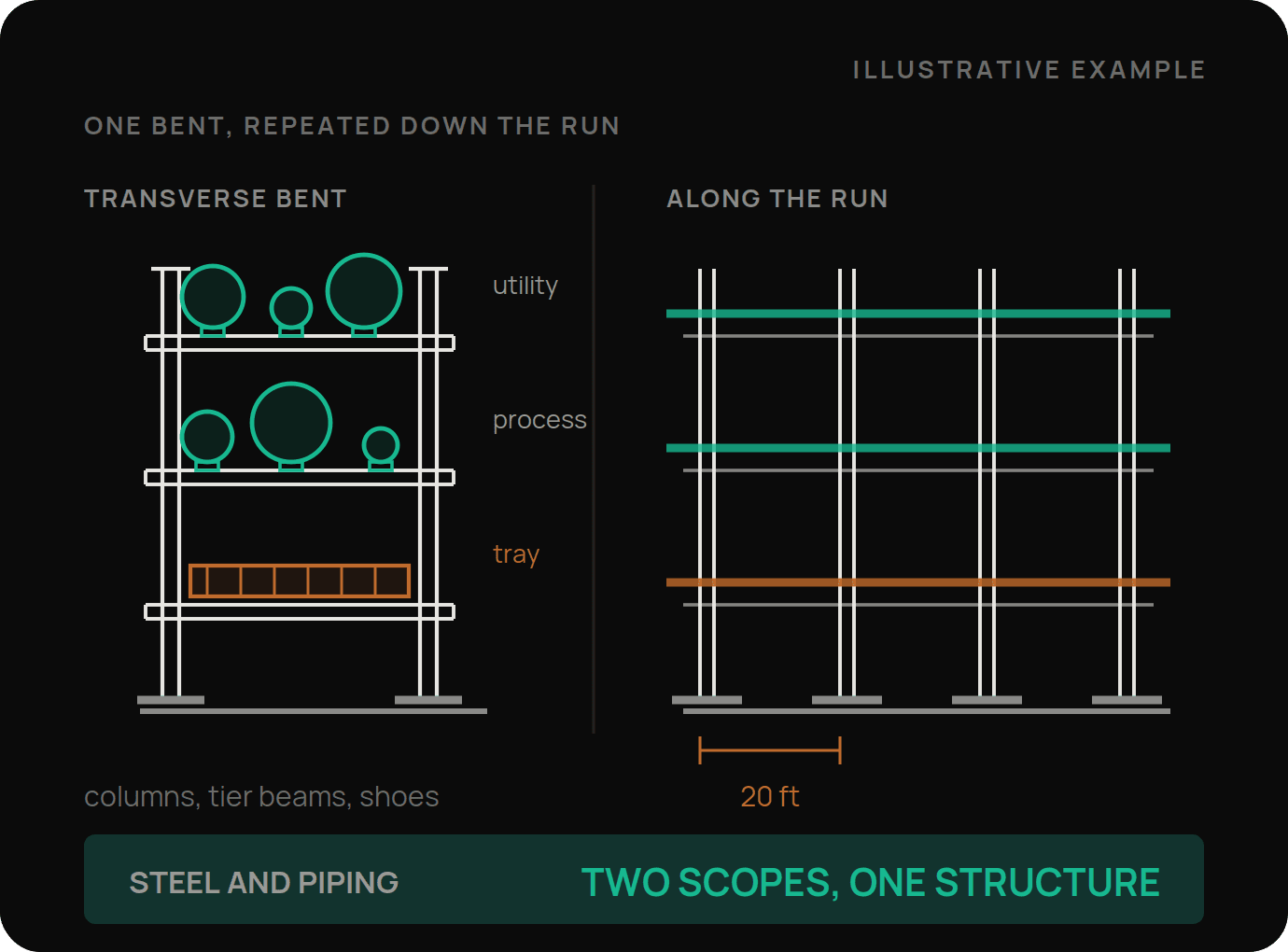
A pipe rack is the elevated steel or concrete structure that carries process and utility piping, cable trays and sometimes equipment across a process plant. It's also called a pipe bridge, pipe way or pipeline corridor, and a storage rack that happens to hold lengths of pipe is not one. For an estimator it's two scopes at once, the steel that holds it up and the piping that runs along it.
Welding Procedure Specification (WPS): What It Is, With PQR and WPQ Explained | The Takeoff AI
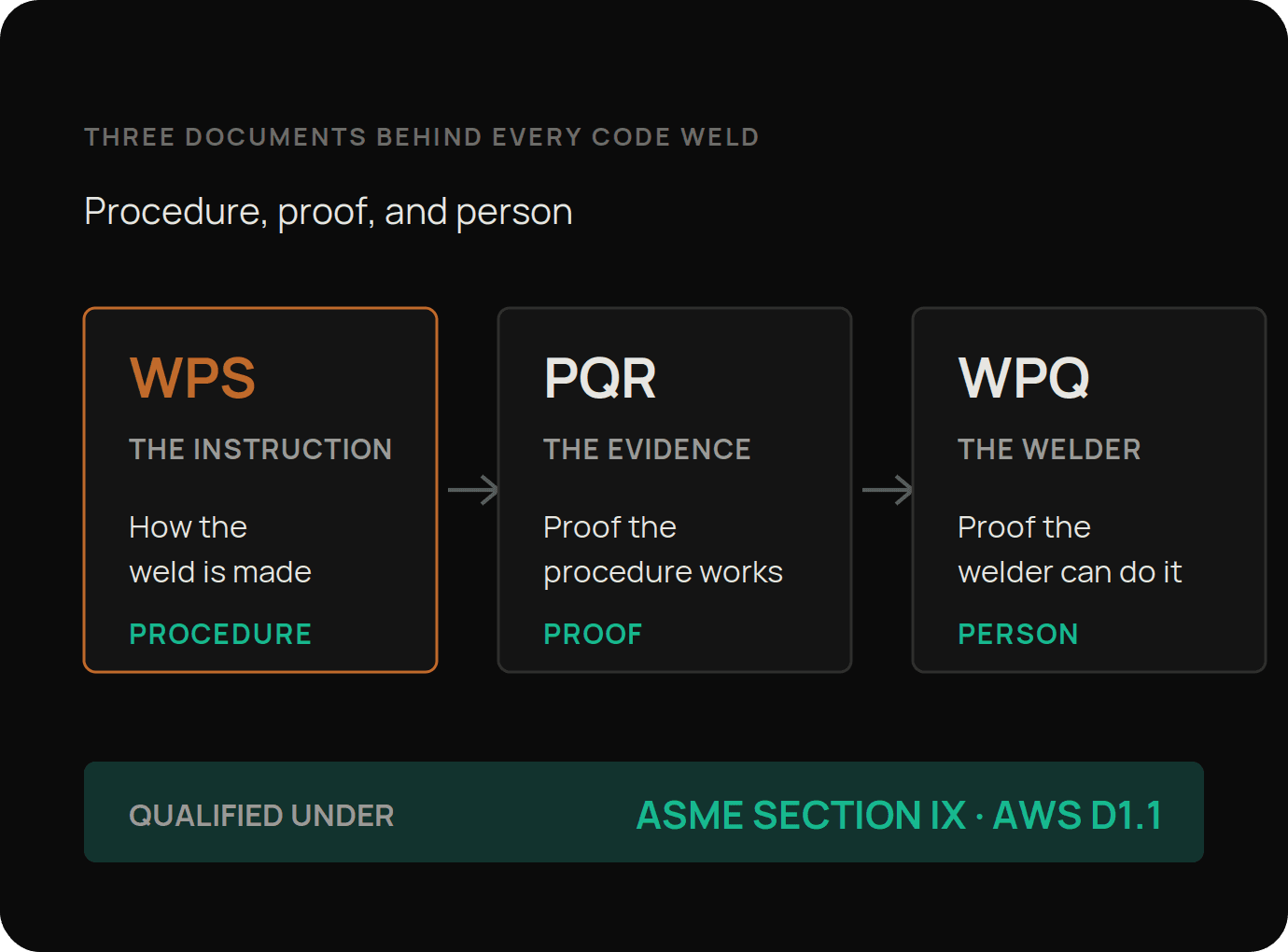
What a welding procedure specification is, what goes on one, how a WPS relates to a PQR and welder qualification, what ASME Section IX requires, and what it costs on a bid.
Estimating Software for Mechanical Contractors
What does theTakeoff do for a mechanical contractor?
It counts the valves, fittings, flanges and welds in your bid package and sizes each one against the line list, then hands back a material takeoff where every line traces to the drawing it came from. Your estimator checks the count rather than producing it.
We usually only have piping and instrumentation diagrams and general arrangements at bid stage. Is that enough?
Yes, and that is the normal case, since isometrics often arrive after award. theTakeoff estimates from whatever the package gives you, and the more the drawings carry, the more of the takeoff comes off them directly.
Does it only do piping?
No. theTakeoff handles several takeoff types across the drawing set, so a mechanical estimator carrying more than one scope is not switching tools halfway through a bid.
Can it read scanned drawings and flat PDFs?
Yes, and that is most of what arrives. There is no model to import and no native file to chase, because the count comes off what is printed on the sheet.
Can I check where a number came from?
Every line in the takeoff points back to the drawing it came from. That is the point of the output, because a bid number you cannot check is a bid number you end up recounting.
Does it replace the estimator?
No. It takes the counting, and your estimator keeps scope, exclusions, productivity and risk, which are the parts that decide whether the bid is any good.