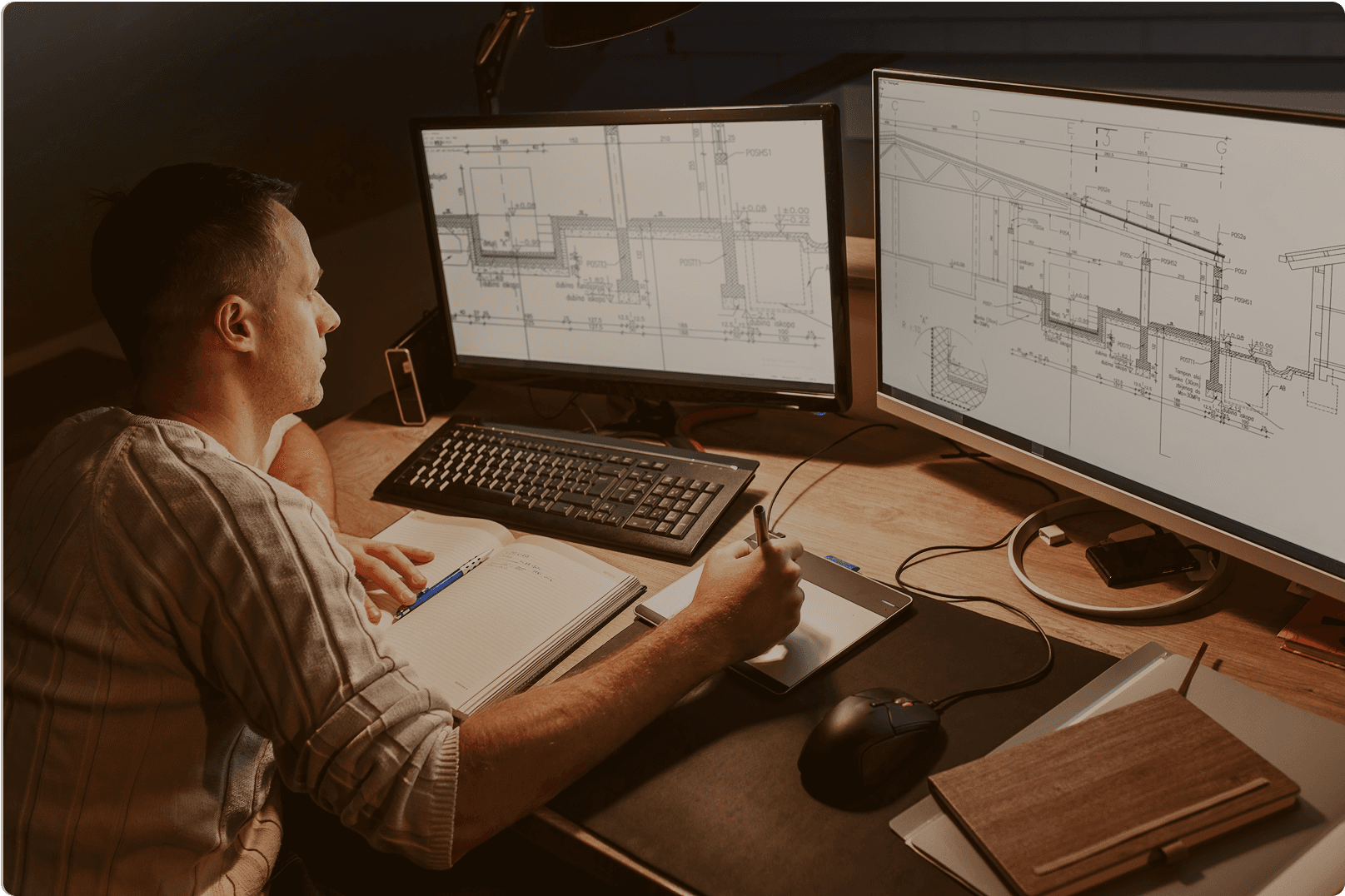
Introduction
A mechanical contractor in Lake Charles walked away from a $6M plant bid last year because his two estimators were already 11 days into another package and there was no third estimator to put on it. The job went to a competitor at a number he would have beaten. Nothing was estimated wrong. The bid simply never happened.
That is the version of the problem nobody puts in software marketing. Pipe estimating software gets sold on accuracy, and accuracy matters, but the constraint most mechanical contractors actually live under is how many bids a small estimating department can physically produce in a quarter.
Pipe is the worst offender inside that constraint. A single line of 6 inch carbon steel carries fittings, welds, hangers, supports, gaskets, bolts, insulation, and testing, and every one of those derives from the pipe rather than being drawn on the plan. Counting the pipe is the easy part. Deriving everything that hangs off it is where the hours go, and where a missed spec break turns into a loss.
Importance of pipe estimating software
Faster project bids
The gain from dedicated pipe software is not measurement speed. It is derivation. Draw a run in a spec-driven system and the elbows, tees, reducers, hangers, welds, and joint labor generate with it, priced and labored, in one action. Doing that by hand in Excel is where four days becomes eleven.
The second gain is repeatability. Once your specs are loaded, the guy who has been estimating for two years produces the same fitting counts as the guy who has been doing it for twenty. Most mechanical shops have exactly one estimator whose numbers everyone trusts, and that person is a single point of failure.
Accuracy that survives an audit
Accuracy in pipe estimating is not one number. Class 3 and 4 bid-stage estimates carry a real tolerance band, usually somewhere around 15% to 30%, because at bid time you have P&IDs, general arrangements and specs but no isometrics. Anyone selling you certainty at that stage is selling something they cannot deliver.
What software should give you instead is defensibility. When your PM asks in month four why the bid carried 1,400 welds and the field is at 1,900, you want to open the estimate, find where those welds came from, and see whether the miss was a factor, a spec, or a scope change. Estimates you cannot audit teach you nothing.

Criteria for choosing the best software
- Spec-driven takeoff, so selecting a line spec automatically pulls the correct pipe, fittings, valves, flanges, and hangers by size and class rather than making you pick each item.
- Labor data that ships loaded, with MCAA or PHCC units behind it, and the ability to overwrite those units with your own historical productivity.
- Traceability from a priced line back to the drawing and the rule that produced it, checkable by someone who did not do the takeoff.
- Export that reaches your accounting and project management systems by cost code, not as a single contract total.
One honest note on disclosure. ContraVault publishes this list and our own product is on it, at number one. We have said what it does not do in the same paragraph as what it does, and every other tool here gets a real limitation too. Read those limitation lines, because on this list the differences between tools are almost entirely about which kind of pipe work you bid.
Top 10 pipe estimating software of 2026
1. The Takeoff AI
The Takeoff AI was engineered for the part of pipe estimating that eats the most hours, which is deriving quantities from bid-stage drawings before isometrics exist. Click any count and you land on the exact element that produced it, along with the rule behind it, so an estimator can verify a number they did not personally measure in seconds rather than trusting an output. The engine reads P&IDs, mechanical drawings, and isometrics, itemizes valves, equipment, and inline instruments from schedules and line lists, then factors bulk quantities like fittings, welds, hangers, and gaskets from line length against spec, using ASME B31.3 and B16.5 class breaks with MCAA labor units underneath. The limitation is scope by design. This is a mechanical and process piping engine, so plumbing fixture counts on a residential tract or architectural takeoff for a GC are the wrong job for it, and sheet metal duct fabrication sits outside it too. Industrial and commercial mechanical contractors carrying heavy piping scope are who it was built for. See how it works at thetakeoff.ai.
2. FastEST FastPIPE
FastPIPE has been in the market since 1995 and remains the workhorse for commercial and industrial plumbing and mechanical contractors. The catalog arrives with current pricing and MCAA and PHCC labor units already attached, so a new customer can bid real work in weeks rather than building a database from scratch. Its on-screen digitizer includes an Auto Connect feature that keeps runs joined as you take off, and a single click returns linear feet, diameter inches, weight, surface area, volume, material cost, and labor hours. FastEST backs it with a 60-day money-back guarantee. The tradeoff is that it is Windows desktop software with a desktop-era interface, built around one estimator owning the job file, which fits distributed teams poorly.
3. ConstructConnect QuoteSoft Pipe
QuoteSoft Pipe is the other name that comes up in every mechanical contractor conversation, usually alongside its Duct counterpart. It automates takeoff, material pricing, labor calculation, and bid generation from a database covering pipe, fittings, valves, hangers, and supports, and its strength is item-level labor detail rather than blanket per-foot rates. Contractors who fabricate get more out of it than contractors who buy prefabricated assemblies. Setup is the price of admission. The labor tables reward a company that spends several weeks tuning them against its own historical productivity, and punish one that runs the defaults and assumes they match their crews. User ratings sit below FastPIPE's on the same comparison sites, and setup effort is the most common reason.
4. Wendes WenPipe
WenPipe is specification-driven in the strictest sense: choose a spec and the system selects item size, pipe, valves, fittings, flanges, and hanger type automatically as you take off. Labor comes preloaded with National Average, MCAA, and PHCC options, all customizable to your own rates. What makes Wendes stand out for contractors thinking past the bid is export. Labor and material data moves out to CAD, accounting, and project management systems, so the estimate can become the budget instead of dying as a PDF. Wendes is a smaller vendor than Trimble or ConstructConnect, which means support tends to be personal and direct while the product roadmap moves slowly and the interface shows its age.
5. Trimble AutoBid Mechanical
AutoBid Mechanical targets larger mechanical contractors running high bid volume across pipe and duct. Its real advantage is what sits around it, since Trimble also owns fabrication and field layout products, so an estimate can carry forward into spool drawings and total station layout rather than being re-entered downstream. Contractors already committed to Trimble for fabrication get compounding value. The entry cost is high in both license and calendar, with six to twelve week implementations being normal before the first clean bid goes out. Shops bidding under twenty jobs a year routinely discover they bought more platform than their volume justifies.
6. eTakeoff Dimension
eTakeoff is the measurement specialist that estimators keep quietly recommending to each other. Its extension tool lets you build assemblies that calculate elbows, reducers, and tees at the same moment you measure the pipe, and its Pattern Search finds repeated symbols like valves or air handlers across a sheet set for counting at speed. It connects into Sage Estimating for pricing, which is why it clusters at contractors already running Sage. There is a free 15-day trial. It is a narrow tool with a small community, so shared templates and independent training are scarce compared with PlanSwift, and pricing lives in a separate product you also have to own.
7. ConstructConnect QuickBid
QuickBid handles the half of the problem that takeoff tools leave open: turning quantities into a submitted bid. Sub bid comparison, markup structures, indirects, bond and insurance, and bid forms are its territory, and it pairs natively with On-Screen Takeoff so quantities flow across without a re-key. For a commercial mechanical contractor bidding to GCs on structured forms, that pairing removes the spreadsheet that usually sits between the takeoff and the number. It is not a pipe takeoff tool on its own, so buying QuickBid without a takeoff product solves nothing, and the two-product cost puts it above what a small shop expects to spend.
8. PlanSwift
PlanSwift is the generalist a lot of mechanical estimators started on, and plenty still use it for pipe layout takeoff. It measures anything on a PDF and you build your own assemblies, so a contractor bidding mixed scope covers several trades with one tool. The catch is that PlanSwift knows nothing about pipe until you teach it. Fitting generation, spec breaks, joint labor, and hanger spacing are all setup work you perform yourself, which is exactly what FastPIPE and WenPipe ship preloaded. It is also Windows-only with no browser or Mac version.
9. STACK
STACK is the cloud option, and the reason to choose it is a team rather than a feature. Several estimators work the same plan set at once, markups are shared live, and there is nothing to install on anyone's machine. It integrates with Procore, QuickBooks, and Sage Intacct, covering the handoff into project management and accounting, and a free tier lets you test it on a live job before spending anything. Depth is the compromise. Assemblies are workable but shallower than the pipe specialists, there is no MCAA labor library behind them out of the box, and heavy industrial plan sets can feel slower in a browser than in native Windows software.
10. Bluebeam Revu
Revu is not estimating software and a large share of American pipe estimators use it that way regardless. Its measurement tools handle lengths, counts, areas, and perimeters on PDFs with custom columns that export to Excel, which is enough for smaller plumbing bids. Where nothing beats it is document work: markup, RFI redlining, and multi-user Studio sessions during addenda, when a spec change needs to reach four people the same afternoon. There is no material catalog, no labor units, and no fitting logic behind the measurements, so every quantity still needs a spreadsheet to become a bid, and it has been Windows-only since 2023.
Comparing features of the top software
The list breaks into four groups, and knowing which group you need eliminates most of the shopping.
Spec-driven mechanical estimating covers FastPIPE, QuoteSoft Pipe, WenPipe, and AutoBid Mechanical. These ship with catalogs and labor units, and they are what you buy if pipe is your revenue. Measurement tools cover eTakeoff, PlanSwift, and Bluebeam, which measure well and leave pricing to you or a partner product. Cloud collaboration is STACK's argument, and bid assembly is QuickBid's. AI extraction is where The Takeoff AI sits, working on the derivation problem before isometrics exist.
Where contractors waste money is buying across groups without meaning to. A shop that already owns FastPIPE does not need PlanSwift, and a shop that bought Bluebeam expecting fitting logic is going to end up in Excel with a very expensive ruler.
Benefits of using pipe estimating software
Bid volume is the benefit that shows up on the P&L. Estimators who move off spreadsheets consistently report the change as more bids submitted rather than less time per bid, because the freed hours immediately get consumed by the next package. If your win rate holds and you bid 30% more work, that is the whole return.
The quieter benefit is knowledge that survives turnover. A tuned spec library and a labor database are your company's estimating experience written down. When the senior estimator retires, and in this trade he is retiring soon, the difference between a company that captured his factors in software and one that kept them in his head is enormous.
How pipe design software integrates with other tools
Pipe design software and pipe estimating software solve different problems and get confused constantly. AutoCAD Plant 3D, Revit MEP, and similar pipe layout software author the geometry: routing, clash detection, and drawing production. Estimating software consumes the output, whether that comes through as a model export, an isometric BOM, or a PDF sheet set.
The direction of that handoff decides how much value you get. Where a design model exists and is built to a usable level of detail, quantities can come straight out of it, which is faster and less prone to human miscount than measuring paper. On brownfield and retrofit work, which is most of the American industrial market, you get scanned PDFs of drawings from 1994 and no model at all, so the extraction problem is the real problem.
Downstream, check that whatever you buy exports by cost code into your accounting and project management systems. Wendes explicitly supports export to CAD, accounting, and project management platforms, and STACK carries native connections to Procore, QuickBooks, and Sage Intacct. A tool that only exports a lump sum leaves your PMs reconstructing the bid by hand.
FAQs on pipe estimating software
What to look for in bidding software for plumbing?
Separate the two jobs before you shop. Plumbing takeoff means fixture counts, pipe runs by material and size, and fitting derivation, which is FastPIPE, QuoteSoft, or eTakeoff territory. Bid assembly means sub quotes, markup, indirects, and the GC's bid form, which is what QuickBid handles. Service and replacement plumbing is a different market again, closer to field service software than to construction estimating solutions.
What accuracy should I expect at bid stage?
At bid stage you have P&IDs, general arrangements, and specs, so a Class 3 or 4 estimate with a tolerance band in the range of 15% to 30% is the realistic target and factored methods are expected. Precision improves once isometrics exist post-award. Any vendor quoting a single accuracy percentage without telling you which drawings it was measured against is quoting marketing.
How long does implementation take?
Preloaded catalog tools like FastPIPE and WenPipe get a contractor bidding in a few weeks. Enterprise platforms like AutoBid Mechanical run six to twelve weeks before a clean bid goes out. Generalist tools like PlanSwift have no implementation and no database either, so the setup time moves onto your estimators instead of the calendar.

Conclusion
If your bottleneck is the fitting and labor derivation on commercial plumbing and mechanical work, buy a spec-driven system with a preloaded catalog and budget weeks, not days, for tuning it to your crews. If it is bid assembly and sub leveling, that is a separate purchase and you probably already own the takeoff half. If it is industrial process piping quantities at bid stage, where the drawings are PDFs, the isometrics do not exist yet, and one missed spec break moves the number by six figures, look at an engine where every count traces back to the drawing that produced it.
See a verifiable takeoff on your own drawings at thetakeoff.ai