Guaranteed Maximum Price (GMP): What It Is and How to Estimate One | The Takeoff AI
A guaranteed maximum price (GMP) is a contract where the owner pays the actual cost of the work plus a fee, up to a ceiling the contractor guarantees. Everything above that ceiling comes out of the contractor's pocket, which makes the quantities behind the number the thing that decides whether the job earns or bleeds.
Common on industrial and process work where design is still developing when the price is set.
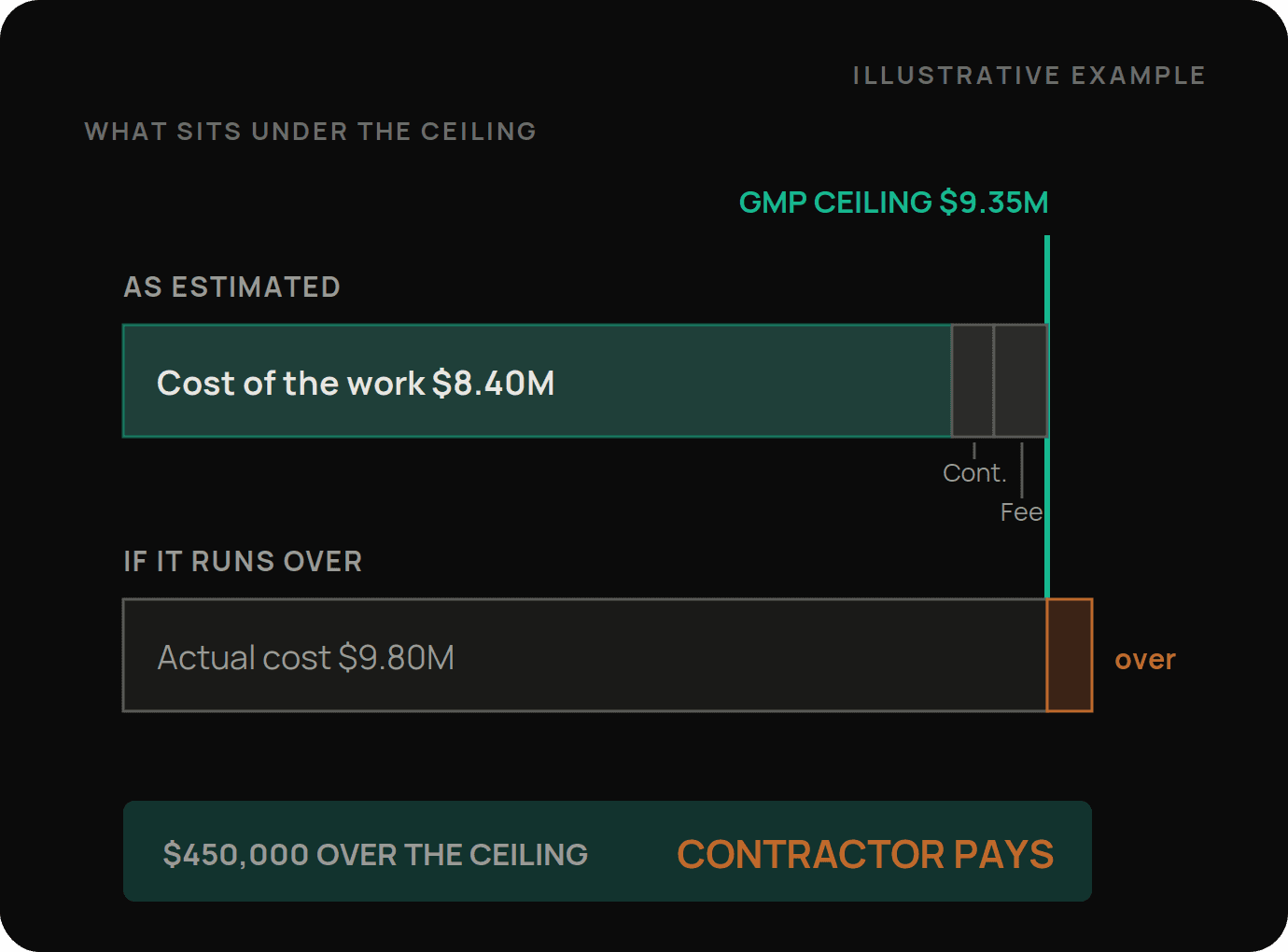
How a Guaranteed Maximum Price Works
A GMP sits between cost plus and lump sum. The owner sees the actual costs, and the contractor carries the ceiling.
Build the Cost of the Work
Quantities off the drawings, priced with material and labor, plus equipment, subcontracts, general conditions and the schedule duration behind them.
Add Contingency and Fee
Contingency covers what the drawings don't show yet, and it should be sized to how complete the design is rather than picked as a round percentage. The fee covers overhead and profit and is usually fixed.
Set the Ceiling
The total becomes the guaranteed maximum. Costs below it are usually shared or returned to the owner under the savings clause, and costs above it are the contractor's to absorb.
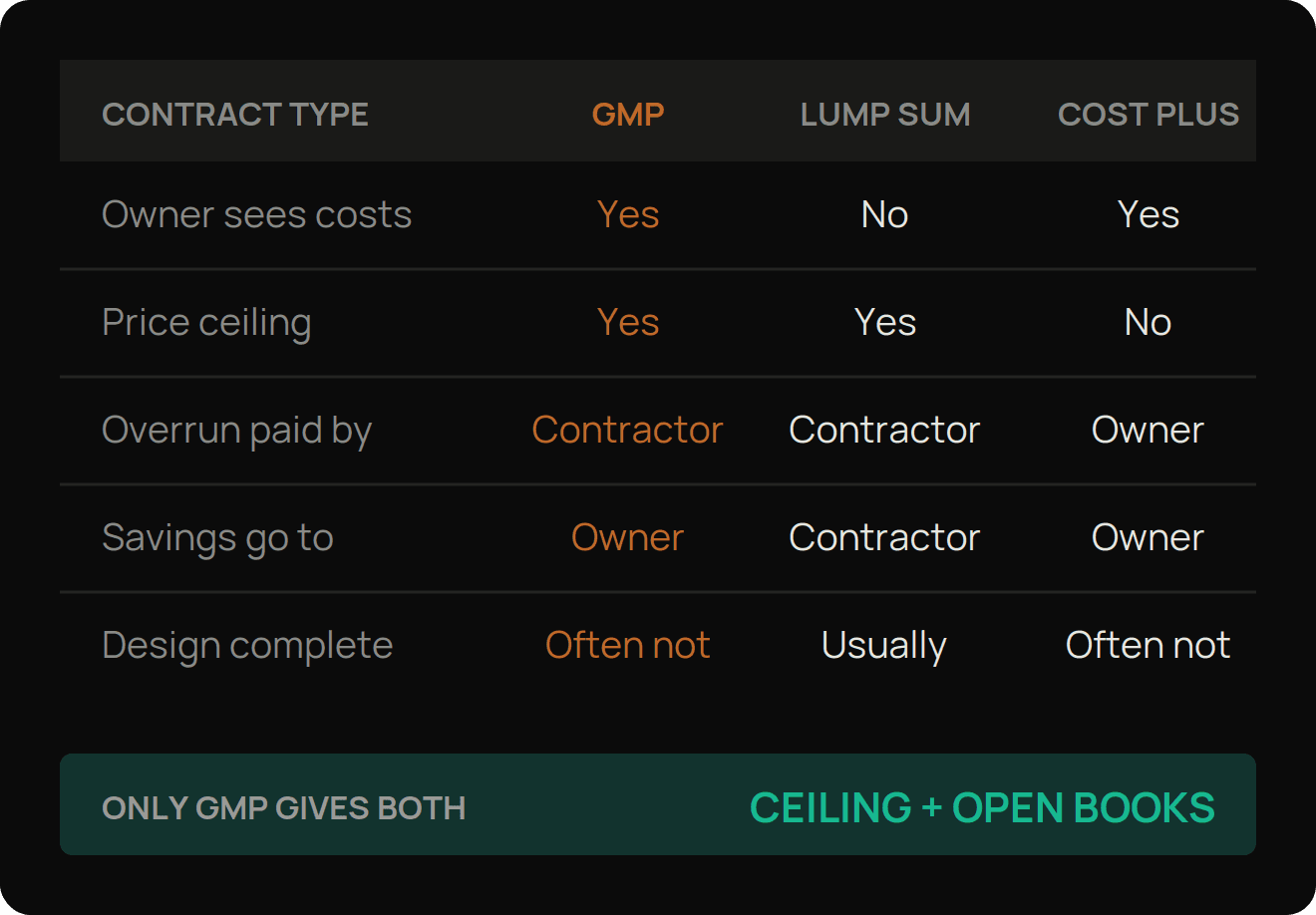
GMP, Lump Sum and Cost Plus
The three differ in who carries the overrun and how much the owner sees. A GMP gives the owner open books and a ceiling at the same time, which is why owners like it and why the contractor's estimate has to be right the first time.
- GMP caps the owner's exposure and leaves the overrun with the contractor
- Costs are open book, so the owner sees what the work actually cost
- Savings below the ceiling are shared or returned, depending on the contract
Why a GMP Rests on the Quantities
Under a lump sum a missed quantity hurts, and under a GMP it hurts in a specific way, because the cost is visible to the owner and the ceiling doesn't move. Contingency is meant to cover design development rather than counting errors, so quantities missed at takeoff eat into the fee directly.
The Takeoff AI builds the full material takeoff from the package, including the items the spec requires but nobody draws, flags anything it couldn't read instead of guessing, and traces every line back to its sheet. Your estimator checks the count, applies your own rates, and the number under the ceiling is one you can show the owner line by line.
- Derived items resolved from the spec, not from memory
- Every line traced to its sheet for open-book review
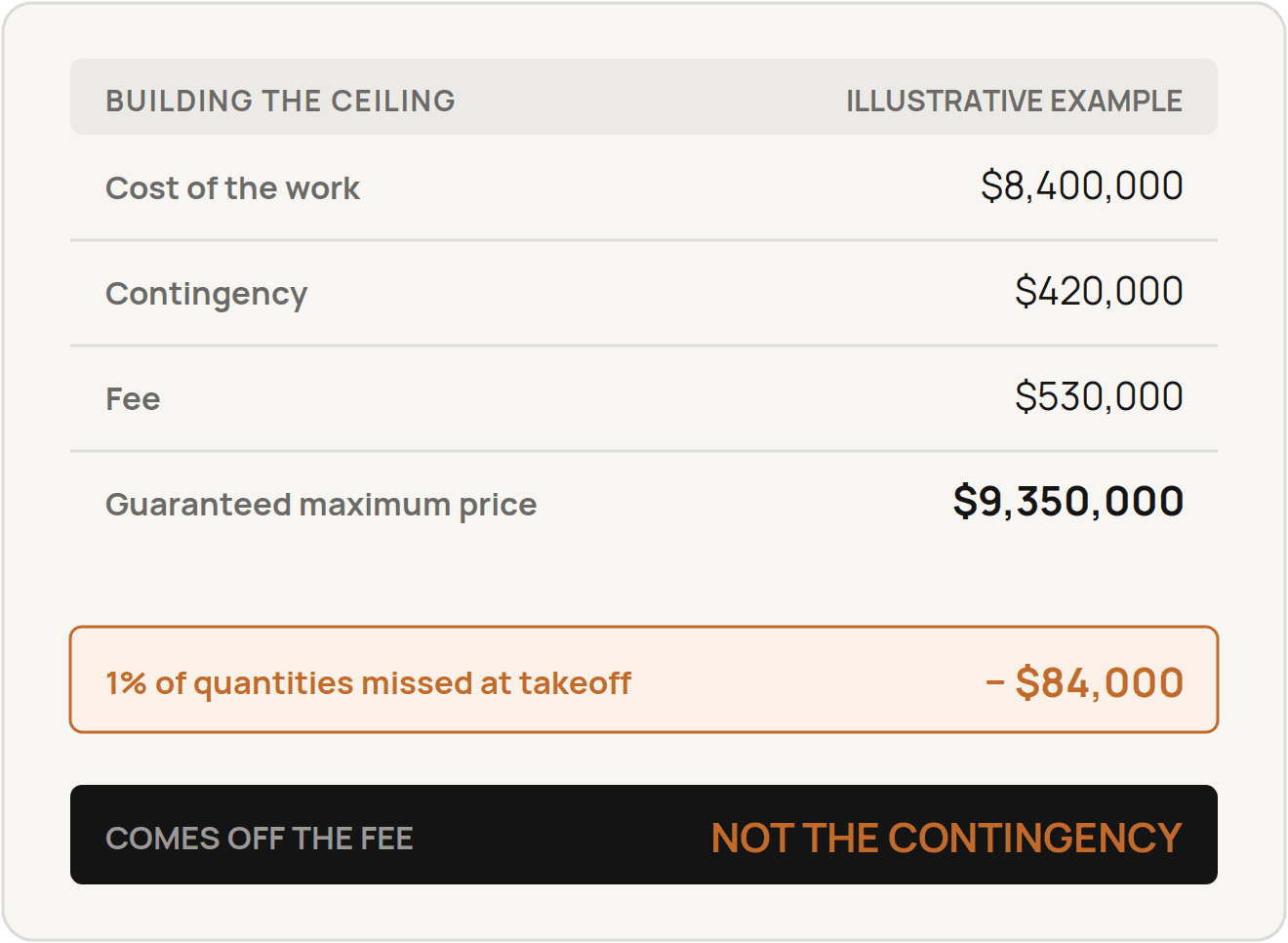
Illustrative example. Missed quantities come out of the fee, not the contingency.
Owners Want a Ceiling Before the Design Is Finished
More industrial work is being awarded on a guaranteed maximum price while the drawings are still developing, which asks contractors to guarantee a number against an incomplete package. That puts the weight on two things, how accurately you count what is drawn, and how honestly you size the contingency for what isn't.
A ceiling set on a shaky count is a guarantee against yourself.
Trusted by 200+ enterprises across EPC, Infrastructure, and Energy











Reference the Estimating Library
Practical takeoff references, charts and workflow guides, built for working estimators.
Guaranteed Maximum Price (GMP): What It Is and How to Estimate One | The Takeoff AI
What is a guaranteed maximum price?
A contract where the owner pays the actual cost of the work plus a fee, up to a ceiling the contractor guarantees. Costs above the ceiling are the contractor's to absorb, and costs below it are shared or returned to the owner depending on the savings clause.
What is the difference between GMP and lump sum?
Both cap what the owner pays. Under a lump sum the contractor keeps whatever it doesn't spend, and under a GMP the books are open and the underspend goes back to the owner or gets split.
What is included in a GMP?
The cost of the work, meaning labor, material, equipment and subcontracts, plus general conditions, contingency and the contractor's fee. The contract also lists the drawings, specifications and assumptions the number was built on.
Who pays if the job goes over the GMP?
The contractor, unless the overrun comes from a change in scope the owner directed or from something the contract lists as an exclusion, which moves the ceiling through a change order.
When is a GMP the right contract?
When the owner wants cost certainty before the design is finished and is willing to open the books to get it. If the drawings are complete, a lump sum is simpler for both sides.